

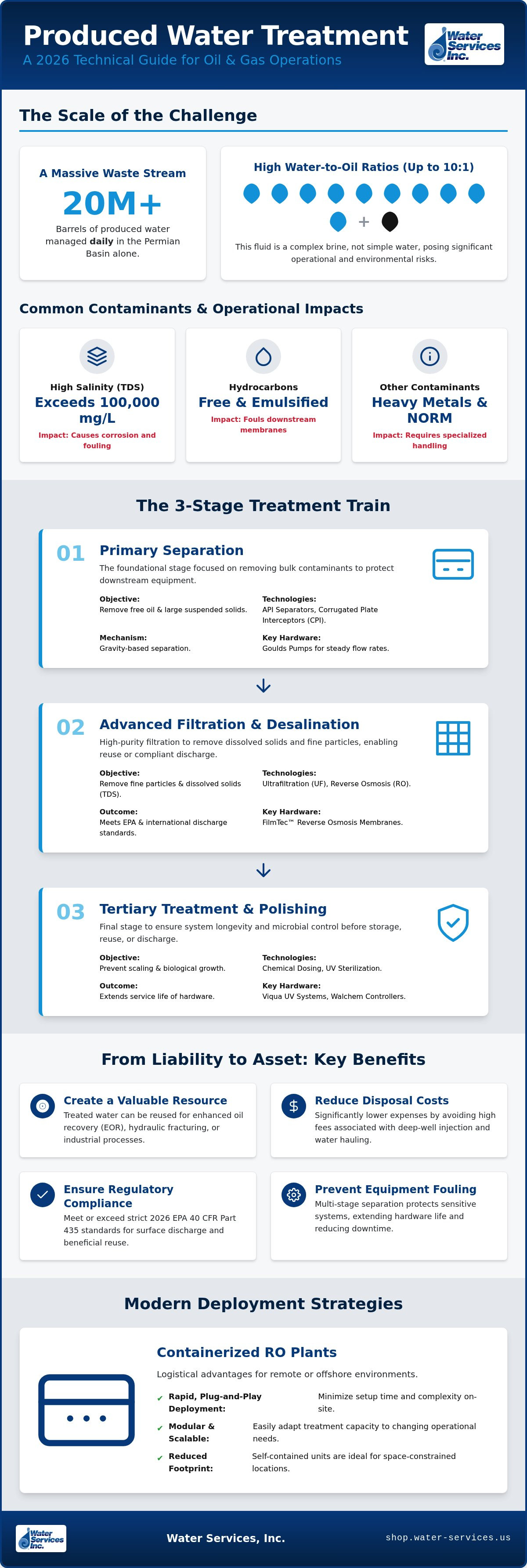
In the Permian Basin alone, operators manage over 20 million barrels of produced water every day, often dealing with water-to-oil ratios as high as 10 to 1. You understand that this volume represents more than a waste stream; it's a significant operational cost that impacts your bottom line. High salinity levels and residual hydrocarbons cause frequent equipment fouling, while strict EPA 40 CFR Part 435 standards make regulatory compliance for surface discharge a complex engineering challenge. Implementing the right produced water treatment technologies for oil and gas is now a requirement for maintaining site viability and avoiding rising disposal fees.
This 2026 guide provides a technical overview of the primary, secondary, and tertiary systems used to treat and repurpose these complex fluids. We'll analyze the performance metrics of modular separation units, Goulds centrifugal pumps, and advanced FilmTec reverse osmosis membranes. You'll learn how to design a multi-stage treatment train that recovers hydrocarbons and meets international discharge standards. This manual covers the hardware specifications and filtration stages necessary to transform produced water into a reliable resource for enhanced oil recovery or industrial reuse.
Key Takeaways
- Learn how multi-stage separation prevents equipment fouling by removing bulk hydrocarbons and suspended solids before they reach sensitive membrane systems.
- Understand how modern produced water treatment technologies for oil and gas, including ultrafiltration and reverse osmosis, enable compliance with 2026 EPA discharge standards.
- Discover the critical role of chemical antiscalants and Viqua UV sterilization in preventing biological growth and extending the service life of industrial hardware.
- Evaluate the logistical advantages of containerized reverse osmosis plants for rapid, plug-and-play deployment in remote or offshore environments.
- Identify engineering strategies to reduce high disposal costs by treating produced water for industrial reuse or enhanced oil recovery.
Understanding the Challenges of Produced Water in Oil and Gas Operations
Extraction processes generate vast volumes of produced water, a complex byproduct trapped in deep geological formations. As oil and gas are lifted to the surface, this water accounts for the industry's largest waste stream by volume. In high-output regions like the Permian Basin, operators manage up to 10 barrels of water for every single barrel of oil produced. This fluid isn't just water. It's a concentrated brine containing a difficult mix of contaminants:
- Total Dissolved Solids (TDS) levels often exceeding 100,000 mg/L.
- Free-phase and emulsified hydrocarbons.
- Heavy metals and naturally occurring radioactive materials (NORM).
Managing these components requires specialized produced water treatment technologies for oil and gas to prevent environmental contamination and operational downtime. The economic burden of management is a primary driver for engineering innovation. Traditional disposal methods, such as deep-well injection, face increasing constraints due to induced seismicity concerns and limited capacity. Treating water for beneficial reuse or surface discharge significantly reduces hauling costs and injection fees. Efficient treatment turns a liability into a resource for hydraulic fracturing or industrial cooling.
Chemical and Physical Characteristics of PW
Produced water chemistry varies significantly by basin. High salinity levels create a highly corrosive environment for standard carbon steel components. Engineers must distinguish between free-phase hydrocarbons, which are easily separated by gravity, and emulsified oils that require chemical or mechanical intervention. Temperature also plays a critical role in system design. High-temperature fluids from deep wells can degrade standard seals and membranes. This necessitates the use of high-grade alloys in Goulds pumps and specialized heat-resistant membrane housings to maintain system integrity.
Regulatory Compliance Standards for 2026
Compliance in 2026 centers on the EPA Effluent Guidelines codified in 40 CFR Part 435. While onshore unconventional operations generally face zero-discharge mandates into navigable waters, the industry is shifting toward beneficial reuse for agriculture and wildlife under specific subparts. In states like Texas, the TCEQ now holds primacy for permitting treated wastewater discharges into rivers. Maintaining compliance requires precise monitoring of pH, conductivity, and flow rates. Integrating Walchem controllers into the treatment train ensures real-time data logging and automated chemical dosing. These are essential for meeting both state and federal reporting requirements. Utilizing advanced produced water treatment technologies for oil and gas ensures that discharge streams consistently meet these evolving international standards.
Primary Separation Technologies: Managing Hydrocarbons and Solids
Primary separation is the foundational stage for all produced water treatment technologies for oil and gas. Its main objective is the removal of bulk free oil and large suspended solids. Without this initial phase, downstream secondary and tertiary equipment would suffer immediate fouling. Effective separation relies on gravity. Because oil is less dense than water, it rises to the surface, while heavier solids settle to the bottom of the vessel. Ongoing Produced Water R&D indicates that optimizing this phase significantly lowers the operational costs of membrane replacement.
Maintaining steady flow rates through these systems is critical. Fluctuations in pressure can disrupt the laminar flow required for gravity-based separation. Utilizing Goulds Water Technology Pumps ensures consistent hydraulic loading. This is necessary for maintaining the residence time required for phase separation. To enhance the speed of this process, engineers often introduce chemical coagulants and flocculants. These chemicals bind smaller particles into larger flocs. This increases their settling velocity or buoyancy, allowing for faster removal of contaminants.
Corrugated Plate Interceptors (CPI) and API Separators
The standard API separator uses a horizontal flow design to capture free oil. However, remote oilfield locations often have limited footprints. Corrugated Plate Interceptors (CPI) solve this by using parallel plates to increase the effective separation area without increasing the tank size. This logic mirrors the engineering found in Mining Wastewater Treatment Solutions. High solids loading requires efficient footprint management. CPI units offer higher efficiency than standard API tanks by reducing the vertical distance oil droplets must travel before capture.
Dissolved Air Flotation (DAF) and Centrifugal Separation
When hydrocarbons are emulsified, gravity alone is insufficient. Dissolved Air Flotation (DAF) systems inject micro-bubbles into the water stream. These bubbles attach to oil droplets and loft them to the surface for mechanical skimming. The selection of specific produced water treatment technologies for oil and gas depends on the concentration of these emulsified oils. For high-volume applications with significant solids content, centrifugal separators provide a mechanical alternative. These units apply high-G forces to achieve rapid phase separation in a compact vessel. Selecting the correct saturation pump for a DAF system is vital for generating the fine bubble size needed for high-purity results. For those managing complex separation projects, high-performance separation hardware ensures long-term reliability in harsh field conditions.
Advanced Filtration and Desalination: Achieving High-Purity Discharge
Primary separation removes the bulk of oil and grease, but secondary and tertiary stages are required to manage dissolved constituents. Produced water often contains high concentrations of chlorides and heavy metals that gravity separation can't address. Implementing advanced produced water treatment technologies for oil and gas allows operators to reach the high-purity levels required for surface discharge or agricultural reuse. For a detailed comparison of available hardware, consult our Industrial Water Filtration Systems guide.
Ultrafiltration (UF) serves as a critical pretreatment step for Reverse Osmosis (RO). These systems remove fine suspended solids and remaining emulsified oils that would otherwise cause rapid membrane fouling. In high-salinity oilfield environments, fouling management determines the system's uptime. Using UF prevents the accumulation of organic matter on the RO membrane surface, extending the interval between Clean-In-Place (CIP) cycles. This sequence is essential for maintaining the flux rates required for high-volume operations.
Industrial Reverse Osmosis (RO) Systems
Reverse osmosis is the standard for desalination in the oil and gas sector. Achieving high rejection rates depends on selecting the correct membrane chemistry. FilmTec RO Membranes are engineered for durability in high-pressure applications. Operators must choose between brackish water membranes for lower TDS streams and seawater membranes for high-salinity produced water. High-performance membranes from Hydranautics also offer specialized rejection characteristics for specific ionic contaminants. To offset the operational costs of high-pressure pumping, large-scale plants integrate energy recovery devices that capture hydraulic energy from the concentrate stream and return it to the feed pump.
Multimedia and Cartridge Filtration
Polishing the water stream requires robust physical barriers. Multimedia Filter Tanks utilize layers of anthracite, sand, and garnet to capture sediment down to approximately 10 microns. For finer protection, cartridge filters are deployed in Pentair Filter Housings. These housings are designed to withstand the high-pressure circuits typical of deep-well injection and RO feed lines. Scheduled maintenance is mandatory. Regularly replacing sediment and carbon filters ensures that the expensive RO membranes aren't compromised by chlorine or fine particulates. This multi-layered approach provides the technical integrity needed for long-term regulatory compliance in harsh environments.
Tertiary Treatment: Chemical Dosing and UV Sterilization
Tertiary treatment represents the final technical barrier in a comprehensive treatment train. While previous stages focus on bulk separation and desalination, this phase provides the precision required for beneficial reuse or strict discharge compliance. Integrating advanced produced water treatment technologies for oil and gas at this level addresses trace hydrocarbons, microscopic solids, and biological activity. The effectiveness of tertiary treatment relies on the synergy between chemical additives and mechanical sterilization. It's a critical step that protects your capital investment from premature degradation.
Precision Chemical Dosing for pH and Scaling Control
Scaling remains a primary cause of membrane failure in high-salinity environments. Calcium carbonate and sulfate precipitation can irreversibly damage RO membranes within hours of exposure. Utilizing Pulsafeeder Metering Pumps allows for the exact delivery of antiscalants and pH adjusters. These pumps provide the high-pressure capability and chemical resistance needed for continuous oilfield duty. Automating the dosing process through a feedback loop reduces operator error and chemical waste. For detailed information on selecting compatible reagents, refer to our Water Treatment Chemicals Distributor guide. Proper chemical integration ensures the longevity of the mechanical assets described in earlier sections.
UV Disinfection and Biological Control
Biological growth presents a unique risk in produced water management. Sulfate-reducing bacteria (SRB) are commonly found in oilfield fluids. These microbes facilitate the production of hydrogen sulfide (H2S), which is both toxic and highly corrosive to steel infrastructure. Viqua UV Water Purification Systems eliminate these biological threats without the logistical burden of liquid chlorine or biocides. UV sterilization provides several advantages in remote locations:
- Zero chemical byproduct formation.
- No requirement for onsite chemical storage or hazardous material handling.
- Instantaneous inactivation of bacteria and viruses.
Maintaining consistent microbial control requires monitoring UV intensity in real-time. This ensures that the dosage remains effective even as water turbidity fluctuates. Using these produced water treatment technologies for oil and gas protects downstream injection wells from plugging due to biofilm accumulation. To source high-reliability dosing and sterilization hardware, browse our full catalog of industrial water treatment equipment.
Modular and Mobile Deployment Strategies for Remote Oilfields
Modularity has become the industry standard for 2026 oilfield development. Traditional fixed-plant construction often fails to meet the rapid timelines of modern exploration or the shifting needs of expanding basins. Modern produced water treatment technologies for oil and gas are increasingly delivered as modular units to reduce onsite construction time. These systems allow operators to scale capacity by adding or removing units as production volumes fluctuate. This flexibility is essential for maintaining a lean operational footprint and managing the high costs associated with remote logistics.
Containerized Reverse Osmosis Plants provide a plug-and-play solution for desalination and dissolved solids management. These units integrate the entire treatment train—including primary separation, ultrafiltration, and RO membranes—into a single ISO shipping container. For rapid response or emergency needs, mobile ultrafiltration systems can be deployed within days to address unexpected spikes in suspended solids or biological contamination. Evaluating the Total Cost of Ownership (TCO) is a critical step for project managers. While purchasing a unit offers long-term asset value, rental models provide a way to manage water without a significant upfront capital expenditure (CapEx).
Engineering Containerized Treatment Systems
Deploying equipment to extreme environments like Africa or the Middle East requires specialized engineering. Containerized plants must feature climate-controlled enclosures to protect sensitive electronics and membranes from ambient temperatures exceeding 50°C. These systems utilize Electric Power Controls to enable autonomous operation in regions where technical personnel are scarce. From our headquarters in Provo, we manage the logistics of shipping these modular units to global sites. Each system is pre-wired, pre-plumbed, and factory-tested to ensure immediate engagement upon arrival at the wellhead.
Rental and Maintenance Services
Equipment leasing serves as a strategic tool for protecting capital in volatile markets. Recurring revenue models allow operators to pay for water treatment as an operational expense (OpEx) rather than a fixed asset. This approach shifts the burden of technical support and maintenance to the equipment provider. Ongoing maintenance contracts are vital for long-term compliance with EPA and international discharge standards. Technicians provide regular membrane cleaning, sensor calibration, and the installation of genuine replacement parts. This proactive management prevents the equipment fouling and downtime that often plague unmonitored systems. Utilizing these produced water treatment technologies for oil and gas through a managed service model ensures that technical integrity is maintained throughout the life of the project.
Optimizing Water Lifecycle Management for 2026 Operations
Efficient management of produced water requires a transition from simple disposal to a structured, multi-stage engineering approach. By integrating primary separation with advanced membrane filtration and tertiary UV sterilization, operators can achieve the high-purity levels necessary for beneficial reuse or surface discharge. It's clear that selecting the right produced water treatment technologies for oil and gas determines the long-term viability of remote wellheads and centralized facilities alike. High-performance hardware remains the only reliable defense against the equipment fouling and corrosion common in high-salinity environments.
Water Services, Inc. has provided expert engineering since 1994, offering a global logistical reach that supports remote industrial sites across Africa and the Middle East. As an authorized distributor for industry leaders like Goulds, FilmTec, and Viqua, we supply the technical components required for high-pressure, high-salinity duty. Our focus on modular, containerized systems ensures that your operation remains compliant and cost-effective regardless of location or water volume. Explore Industrial Water Treatment Solutions at Water Services, Inc. to secure the hardware and technical support needed for your next deployment. We are ready to help you transform your water liabilities into operational assets.
Frequently Asked Questions
What is the most common technology for produced water treatment?
Gravity separation remains the most common primary method due to its cost-effectiveness in removing bulk hydrocarbons and suspended solids. However, as 2026 regulations tighten, secondary and tertiary produced water treatment technologies for oil and gas are becoming standard. These include ultrafiltration and reverse osmosis to manage dissolved solids. Operators often combine these into a multi-stage treatment train to achieve the purity levels required for surface discharge or agricultural reuse.
Can produced water be reused for hydraulic fracturing?
Yes, reusing produced water for hydraulic fracturing is a primary strategy for reducing disposal costs and fresh water demand. This process requires removing suspended solids and adjusting salinity to ensure compatibility with fracturing chemicals. By utilizing advanced filtration and desalination systems, operators can recycle millions of barrels annually. This reduces the burden on local aquifers and minimizes the need for deep-well injection in seismically sensitive areas.
How much does it cost to treat produced water per barrel?
Treatment costs per barrel vary significantly based on the initial water chemistry and the required final purity. Factors such as Total Dissolved Solids (TDS) levels, hydrocarbon concentration, and the volume of water processed impact the overall expense. While basic gravity separation is relatively inexpensive, advanced desalination through reverse osmosis increases the cost due to energy and membrane maintenance. Operators should evaluate the total cost of ownership, including hauling and injection fees, to determine the most economical strategy.
What are the main contaminants found in oilfield produced water?
Oilfield produced water contains a complex mixture of organic and inorganic constituents. The most prevalent contaminants include high levels of Total Dissolved Solids (TDS), ranging from brackish to hypersaline concentrations. Additionally, free and emulsified hydrocarbons, heavy metals, and naturally occurring radioactive materials (NORM) are frequently present. Biological threats, such as sulfate-reducing bacteria, also require management to prevent the production of hydrogen sulfide gas and equipment corrosion during storage or transport.
How do modular water treatment plants differ from fixed infrastructure?
Modular water treatment plants are pre-engineered, containerized systems designed for rapid deployment and scalability. Unlike fixed infrastructure, which requires extensive onsite civil engineering and long construction timelines, modular units arrive factory-tested and ready for immediate engagement. This flexibility allows operators to move equipment between sites as production profiles change. These systems are particularly effective for remote oilfields where permanent construction is logistically challenging or cost-prohibitive for short-term projects.
Is Reverse Osmosis effective for high-salinity produced water?
Reverse osmosis is highly effective for treating high-salinity produced water when paired with the correct membrane chemistry. Standard brackish water membranes may fail in hypersaline conditions, requiring the use of specialized seawater or high-rejection FilmTec RO membranes. To maintain efficiency, the system must include robust pretreatment, such as multimedia filtration and chemical antiscalants. This prevents the rapid fouling and scaling that occurs when high concentrations of salts and minerals are pushed through the membrane surface.
What role does UV sterilization play in produced water management?
UV sterilization provides a chemical-free method for controlling biological growth in produced water streams. It specifically targets sulfate-reducing bacteria (SRB) that cause the formation of corrosive hydrogen sulfide gas. By integrating Viqua UV Water Purification Systems, operators can eliminate microbial threats without the hazards associated with storing and handling liquid biocides. This final polishing step ensures that the treated water is safe for reuse in industrial processes or surface discharge without harming local ecosystems.
How do chemical antiscalants improve the lifespan of RO membranes?
Chemical antiscalants prevent the precipitation of mineral salts, such as calcium carbonate and barium sulfate, on the membrane surface. When these minerals reach their saturation point during the reverse osmosis process, they form hard scales that restrict water flow and damage the membrane structure. By using Pulsafeeder metering pumps to inject precise dosages of antiscalants, operators can maintain consistent flux rates. This proactive chemical management significantly extends the service life of expensive membrane assets and reduces the frequency of maintenance.
0 comentarios