

A system isn’t ready for service just because installation is complete. On-site water treatment system commissioning moves from pre-start checks of electrical systems, valves, and pumps to controlled water-flow testing, performance checks, and handover. Following this sequence helps identify problems before routine operation begins.
A dependable startup takes coordination as well as functioning equipment. A clear commissioning plan, timely progress reports, and practical operator training keep installation, testing, and launch aligned. This article explains each stage, how first-flow and functionality testing reveal issues, what commissioning records should capture, and how staff preparation supports day-to-day operation.
Key Takeaways
- Use a staged startup sequence to catch installation and equipment issues before routine operation begins.
- Keep the commissioning plan and progress reports aligned with actual site conditions, completed work, and handover readiness.
- Prepare facility operators with practical instruction and clear, step-by-step operating references.
- Use first-flow and functionality tests to identify performance issues before moving into full-scale operation.
On-site installation and launch of treatment systems
Installation starts with a site assessment and design review, followed by equipment setup, pre-start checks, and water-based commissioning. For wastewater treatment systems, soil percolation, groundwater, and topography inform suitability and sizing.
Pump Alignment and Equipment Setup
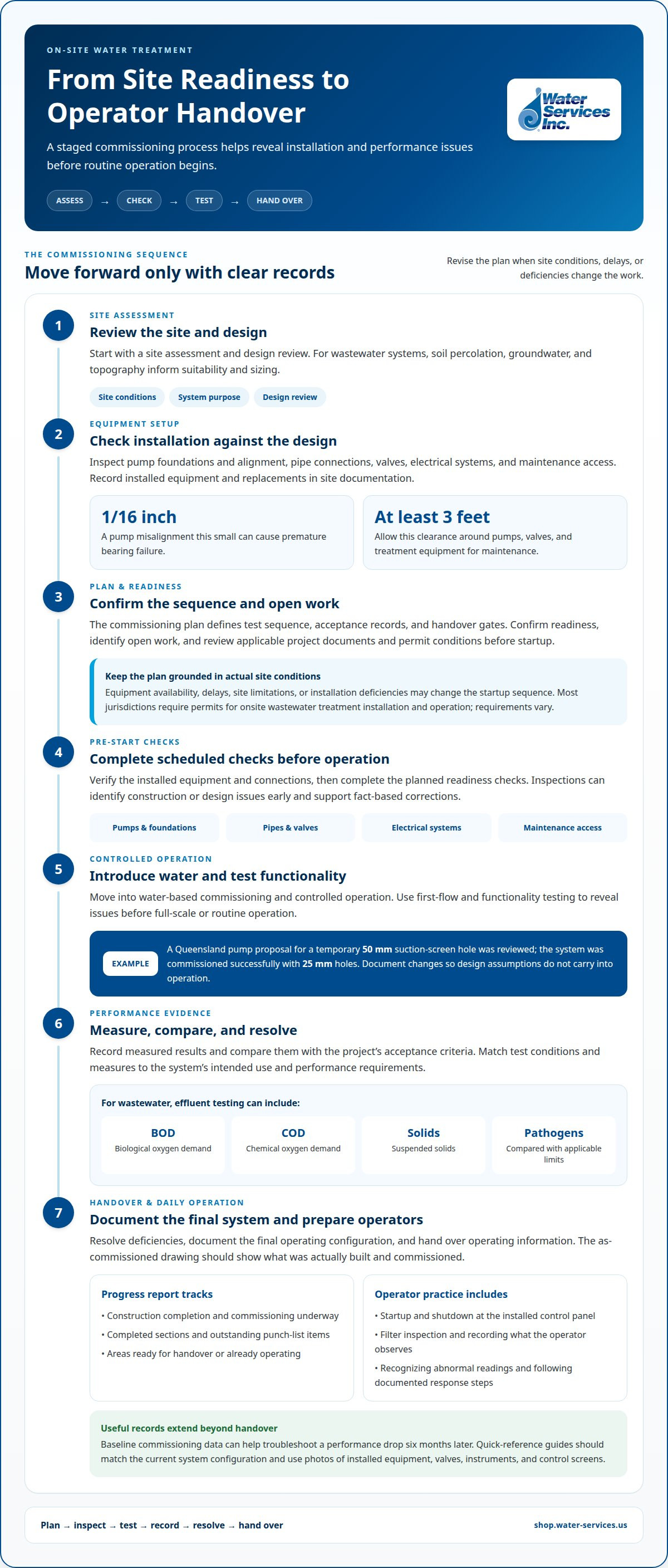
Before operation, the commissioning team checks pump foundations, pipe connections, valves, electrical systems, and maintenance access against the installed design. A pump misalignment of 1/16 inch can cause premature bearing failure, so alignment requires careful measurement. Allow at least 3 feet around pumps, valves, and treatment equipment for maintenance. Record installed equipment and replacements in the site documentation. Check chemical feed equipment, such as a chemical metering pump or peristaltic metering pumps, for secure tubing and mounting at the same time.
Installation and Commissioning Pitfalls
Delays, equipment availability, site limitations, and installation deficiencies can change the startup sequence. The commissioning plan should reflect actual conditions, while inspections identify construction or design issues early and support fact-based corrections. In a Queensland pump example, a temporary 50 mm suction-screen hole proposal was reviewed, but the system was commissioned successfully with 25 mm holes. Documenting changes helps prevent design assumptions from carrying into operation.
Applicable Codes, Permits, and Standards
Which U.S. codes, permits, and standards apply to water treatment system commissioning? Requirements depend on the system and location. Most jurisdictions require permits to install and operate onsite wastewater treatment systems, but requirements vary. Before startup, the commissioning team reviews applicable project documents and permit conditions. An as-commissioned drawing should show what was actually built and commissioned, not just the original design.
Commissioning Cost Factors
How much does on-site water treatment system commissioning cost in the United States? Cost depends on system complexity, site access, equipment availability, testing scope, and any corrective work identified during installation. Replacement equipment or revised pipework can add installation tasks, while incomplete records can require extra documentation. For a facility evaluating treatment equipment, water treatment equipment is one part of planning the system and its launch.
Commissioning plans, strategies, and progress reporting
A commissioning plan defines the test sequence, acceptance records, and handover gates. Revise it when equipment availability, delays, site limitations, or deficiencies affect the planned work.
Requirements by Treatment System Type
The intended use and performance criteria distinguish drinking water, wastewater, and industrial water commissioning. The plan identifies the treatment stages, operating conditions, and acceptance measures for the system. For wastewater, effluent testing can include biological oxygen demand, chemical oxygen demand, suspended solids, and pathogens, with results compared against applicable limits. This keeps testing relevant to the water stream and facility purpose. Equipment differs too: a disinfection stage may use UV water sterilizers, while filtration stages depend on the correct filter cartridges.
Commissioning Scope
Commissioning brings together coordinated checks, operational testing, performance records, issue resolution, and handover. A wastewater progress report tracks construction completion, active commissioning, completed sections, punch-list status, and areas ready for handover or already operating. The commissioning lead coordinates the plan and records; contractors complete assigned work, and facility operators receive the system and its operating information. Practical competence includes understanding the installed process, test methods, and documentation.
Clear equipment records also support later troubleshooting. Baseline commissioning data can help diagnose a performance drop six months later. Facilities planning treatment equipment can review water treatment equipment categories alongside the process requirements.
Step-by-Step Commissioning Procedures
What are the commissioning steps? First, the team confirms readiness and open work, then completes scheduled checks and controlled operation. It records measured results, compares them with the project’s acceptance criteria, resolves deficiencies, and documents the final operating configuration. For wastewater, effluent sampling adds process-performance evidence to the handover record.
Progress reports keep each step visible. Every update identifies construction status, commissioning underway, completed sections, outstanding punch-list items, and handover readiness. Revise the plan when delays or deficiencies change the sequence, so reports reflect actual site progress rather than an outdated schedule.
Wastewater treatment commissioning records provide baseline data for troubleshooting if system performance drops six months later, giving investigators a reference point for assessing the change.
Contractor and facility staff training
Training connects commissioning tests to daily operation. Contractors explain the installed process, while facility operators practise the tasks they will perform after handover. Use the system’s actual controls and operating records during instruction. A filter change, pump start, or flow check gives staff a practical reference point.
Hands-on practice should follow the equipment sequence, not a generic classroom example. Demonstrate how operators read instruments, check process conditions, and respond to a change in flow. For an advanced treatment train, show how each stage affects the next. Staff should know which readings to record and where to find operating limits in the site documentation.
- Walk through startup and shutdown using the installed control panel.
- Demonstrate routine filter inspection and explain what the operator records.
- Practise identifying an abnormal reading and following the documented response steps.
Quick-reference guides make procedures easier to use during a shift. Provide step-by-step instructions with photos of the installed equipment, valves, instruments, and control screens. Label each task clearly and match the guide to the current system configuration. A photo of the correct filter housing can help staff distinguish it from adjacent equipment during inspection.
Training clarifies responsibilities between contractors and facility staff. Contractors explain commissioning adjustments and outstanding punch-list items; operators practise routine checks and recordkeeping. The system’s process, control logic, and maintenance needs determine what instruction each role requires. Keep the handover focused on tasks staff will actually perform, not unrelated equipment examples.
Confirm understanding through demonstration. Ask an operator to locate a component, follow its procedure, and explain the recorded result. If a step causes hesitation, repeat it using the installed controls and revise the quick-reference guide. This practical feedback helps align training materials with site conditions before routine operation begins.
First-time water flow and system functionality testing
The first water flow turns installation checks into evidence of system performance. Staged testing can expose leaks, unstable readings, control issues, and process behaviour that laboratory results alone may not reveal. If the process treats wastewater, test components with real wastewater before full-scale commissioning. This helps identify operating issues under actual conditions before the system moves into full operation.
Begin with controlled flow and observe each treatment stage as water passes through. Compare readings with the commissioning criteria and record the result for each component. Watch for unexpected pressure changes, inconsistent flow, or a control response that differs from the intended sequence. These observations help pinpoint whether a problem is with one unit or across the treatment train.
Instrumentation must provide dependable data. Commissioning checks should confirm that instruments and dosing equipment provide dependable readings and operate as intended. Record calibration status alongside test readings so later reviews can distinguish process variation from measurement error. For chemical dosing, confirm the pump operates against the specified settings and document its observed output. Keep every result traceable to the instrument and component tested. A pressure gauge, a magnetic flow meter, and chemical test strips help confirm readings at each stage.
- Confirm the test medium and the components included in the trial.
- Start flow in a controlled sequence and observe the response at each stage.
- Calibrate instruments and dosing equipment with certified standards.
- Log readings, deviations, adjustments, and retest results.
Different treatment technologies call for different functional checks. A membrane process, for example, needs recorded flow and pressure data; a disinfection stage needs its own operating checks. The commissioning record should link each test to its acceptance criterion, corrective action, and final result. If a component fails, correct the issue and repeat the affected test before treating the system as ready for full-scale operation.
Use the test record to define the operating baseline and identify unresolved issues before handover. For equipment planning tied to treatment stages, review water treatment components alongside the commissioning requirements.
Water Services: Water Treatment Antiscalants and Chemicals
Water Services, Inc. offers Water Treatment Antiscalants and Chemicals for facilities planning chemical treatment as part of an on-site water treatment system commissioning. These products may be relevant when the treatment design includes antiscalant dosing. Commissioning records should capture chemical dosage alongside operating settings, documenting the startup configuration for facility staff.
For systems that also require reverse osmosis, Hydranautics RO Membranes and Goulds Water Technology Pumps are available as related equipment offerings. The right components depend on the treatment process and the facility’s operating requirements. Contact Water Services, Inc. to discuss your water treatment equipment needs.
Put commissioning records to work
Before startup becomes routine operation, make the commissioning record a working reference for the facility team. Use documented test results, outstanding corrective items, and staff procedures to set priorities for the next operating phase. This gives future reviews a clear basis for distinguishing a process change from a measurement or equipment issue.
Water Services offers Goulds Water Technology Pumps, Viqua UV Water Purification Systems, and FilmTec Reverse Osmosis Membranes for facilities planning treatment equipment. Matching equipment to the treatment process connects startup requirements with the system’s intended operation. Documented results from on-site water treatment system commissioning can also inform later equipment and operating decisions.
To discuss equipment requirements for your facility, contact Water Services. A clear next step helps your team move from startup planning to steady, informed operation.
Frequently Asked Questions
What tests and performance criteria are required during water treatment system commissioning?
Required tests depend on the treatment process and its acceptance criteria. Wastewater effluent testing can measure biological oxygen demand, chemical oxygen demand, suspended solids, and pathogens, with results compared against applicable limits. For other systems, commissioning records should link measured operating results to the project’s stated criteria. Calibrated instruments and documented sampling conditions make results more useful for later operational reviews.
What commissioning documents and deliverables should the contractor provide?
The handover package should help operators understand the final installed configuration and its operating baseline. Include as-commissioned drawings, updated P&IDs, test results, instrument calibration records, system settings, and resolved or outstanding punch-list items. Capture pressure, temperature, flow rate, and chemical dosage where applicable. Operators also need clear procedures for routine tasks and a record of training completed on installed equipment.
What are common commissioning risks and failures for on-site water treatment systems?
Common risks include equipment delays, installation deficiencies, unsuitable test conditions, and unresolved control or process issues. Testing only under laboratory conditions may miss behaviour that appears with real wastewater. Incomplete records can also make it harder to identify why performance changes during operation. Track each deviation through its cause, corrective action, and retest result, rather than closing an issue based only on visual inspection.
How long does water treatment system commissioning take, and what factors affect the schedule?
The commissioning schedule follows project readiness and can run from late construction through final handover, sometimes including assisted operation. Equipment availability, construction completion, access to operating utilities, testing needs, and corrective work all affect the sequence. Retesting after adjustments and coordinating operator handover also influence the finish date. A progress schedule should show completed areas, active tests, open items, and sections ready for handover.
Who is responsible for commissioning, and what qualifications should the commissioning provider have?
The commissioning lead coordinates the plan and records, contractors complete assigned work, and facility operators receive the system and operating information. Practical competence includes understanding the installed process, test methods, and documentation.
0 comentarios