

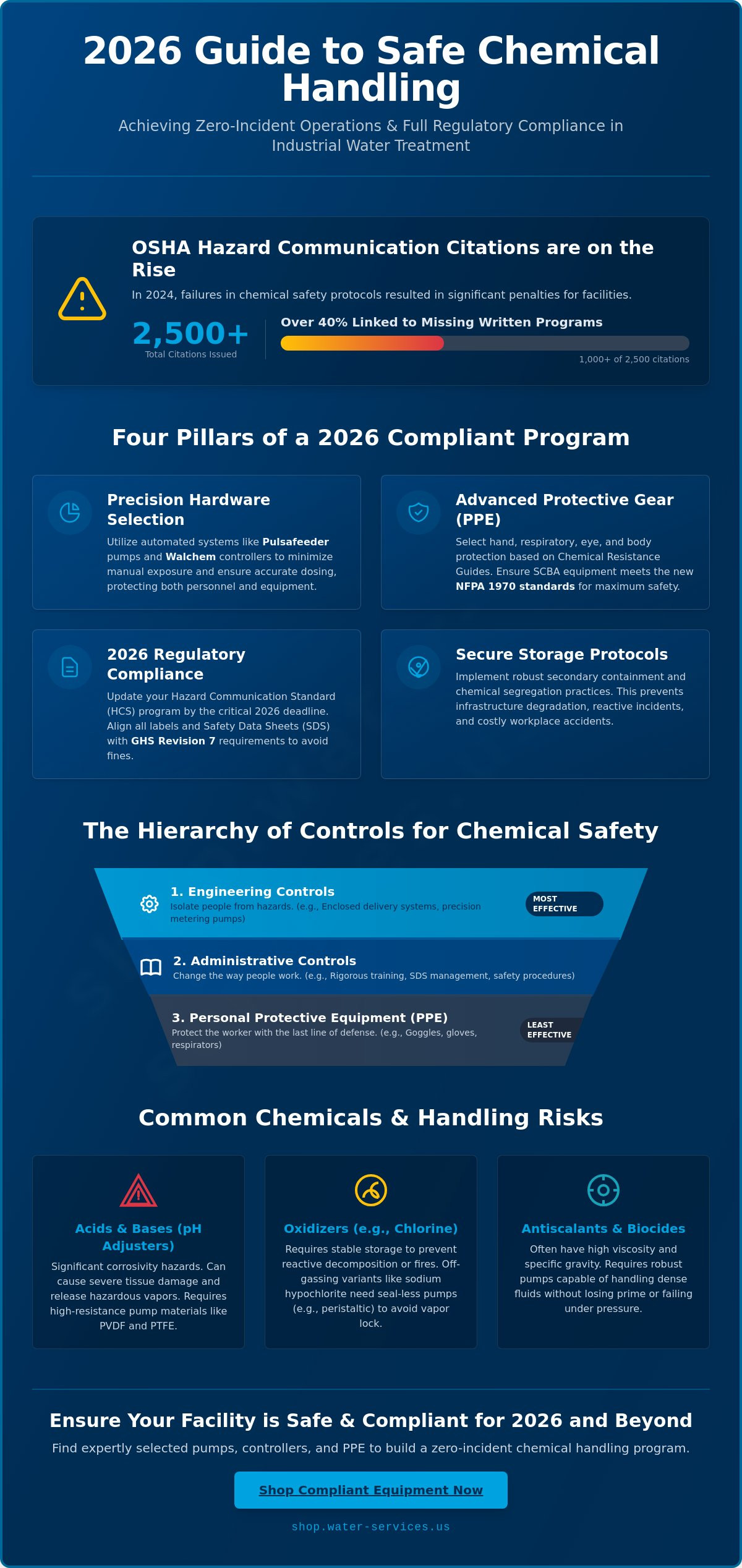
OSHA issued over 2,500 hazard communication citations in 2024, with more than 1,000 of those linked to missing written programs. You understand that industrial water treatment chemical handling presents constant risks to both personnel and infrastructure. Corrosive substances don't just threaten skin and eyes; they degrade seals, metering pumps, and sensors if the hardware isn't precisely matched to the chemistry. Equipment failure leads to costly waste and potential environmental violations that your facility cannot afford.
This 2026 buying guide provides the technical specifications you need to achieve zero-incident operations and full regulatory compliance. You'll learn how to select high-performance Pulsafeeder pumps, Walchem controllers, and specialized PPE that meets the new NFPA 1970 standards. We'll also examine the critical OSHA HCS deadlines for 2026 to ensure your labels and safety data sheets align with GHS Revision 7. This overview secures your path toward longer equipment lifespans and a safer workplace.
This 2026 buying guide outlines the technical requirements for safe chemical management in high-volume facilities. Key focus areas include:
- Selection of precision hardware, including Pulsafeeder metering pumps and Walchem controllers, for automated industrial water treatment chemical handling and minimized manual exposure.
- Identification of protective gear for hand, respiratory, eye, and body protection based on specific Chemical Resistance Guides for antiscalants, biocides, and pH adjusters.
- Compliance with 2026 regulatory standards, specifically NFPA 1970 SCBA requirements and GHS Revision 7 hazard communication updates for Safety Data Sheets.
- Implementation of secure storage protocols using secondary containment and chemical segregation to prevent infrastructure degradation and workplace accidents.
The Fundamentals of Industrial Water Treatment Chemical Handling
Industrial water treatment chemical handling encompasses the entire technical lifecycle of a substance within a facility. This process begins at the loading dock and continues through bulk storage, internal transport, and precise dosing into the process stream. Effective management ensures that chemicals perform their intended function without compromising operator safety or infrastructure integrity. Understanding The Fundamentals of Industrial Water Treatment is the first step in designing a safe handling protocol that protects both your personnel and your capital equipment.
The primary chemicals used in these processes include antiscalants, coagulants, biocides, and pH adjusters. Each class presents unique hazards. Improper handling leads to chemical burns, toxic inhalation, or environmental spills that trigger heavy regulatory fines. In 2026, the industry is shifting toward automated monitoring and enclosed delivery systems. This transition reduces human exposure by utilizing IoT sensors and digital controllers to manage chemical levels and flow rates. These smart systems provide real-time data, allowing operators to oversee the process from a safe distance while maintaining precise control over chemical concentration.
Common Chemicals and Their Handling Risks
Acids and bases are essential for pH control but represent significant corrosivity hazards. High-concentration sulfuric acid or sodium hydroxide can cause severe tissue damage upon contact and release hazardous vapors in confined spaces. Oxidizers like chlorine or peracetic acid require stable storage environments to prevent reactive decomposition or fires. For industrial reverse osmosis systems, antiscalants are critical for membrane longevity. These chemicals often have high viscosity and specific gravity. Handling them requires equipment that can manage dense fluids without losing prime. You can find specialized water treatment chemicals designed for these demanding industrial applications.
The Hierarchy of Controls in Chemical Safety
Safety begins with engineering controls. Enclosed delivery systems and precision metering pumps, such as those in our industrial pump collection, isolate the operator from the chemical stream. These systems automate the dosing process. This eliminates the need for manual pouring and reduces the risk of splashing. Administrative controls follow, focusing on rigorous training and SDS management. By the July 2026 deadline, employers must update workplace programs to reflect new substance labeling requirements. PPE serves as the final line of defense. It protects the worker when engineering and administrative controls are bypassed or fail during maintenance tasks.
Selecting Equipment for Safe Chemical Delivery and Dosing
Hardware precision serves as the primary method for minimizing manual interaction with hazardous substances. When you automate delivery, you reduce the potential for splashes, spills, and chronic exposure. Selecting the right equipment ensures that industrial water treatment chemical handling remains a controlled, closed-loop process. This approach protects operators while maintaining the technical integrity of the treatment stream.
Metering Pumps for Precision Handling
Diaphragm pumps are the industrial standard for high-pressure dosing of corrosive chemicals. They provide excellent chemical resistance and precise stroke control for consistent concentration. Peristaltic pumps offer a seal-less design, which is ideal for off-gassing chemicals like sodium hypochlorite that often cause vapor lock in other pump types. Pulsafeeder metering pumps provide the mechanical durability required for 24/7 industrial operations. Material selection for pump heads is critical for long-term reliability. PVDF and PTFE components withstand aggressive acids and bases, while 316 stainless steel is preferred for specific high-pressure applications where chemical compatibility allows. Choosing a pump specifically rated for the fluid's viscosity and pH prevents premature seal failure and environmental leaks.
Process Control and Monitoring
Manual dosing is inherently prone to human error and over-treatment. Walchem controllers automate the feed process by responding to real-time sensor data, ensuring chemicals are only dispensed when necessary. These units interface with Signet flow sensors and Ashcroft pressure gauges to monitor system health and detect handling failures immediately. If a line ruptures or a pump loses prime, these controllers can trigger an immediate system shutdown. This level of automation is essential for meeting OSHA standards for PPE by reducing the frequency of worker intervention in hazardous areas. Remote monitoring capabilities also allow mining and power plant operators to track chemical inventory levels and dosing rates without physical entry into containment zones.
Effective industrial water treatment systems rely on this seamless hardware integration. By pairing high-accuracy pumps with digital controllers, you ensure consistent water quality and minimal chemical waste. If you're looking to optimize your facility's safety and efficiency, you can browse our full range of precision control hardware to find the right components for your specific chemical profile.
Essential PPE for Industrial Chemical Handling
Industrial water treatment chemical handling requires a rigorous approach to personal protective equipment (PPE). While engineering controls like Pulsafeeder pumps isolate hazards, PPE serves as the critical final barrier. Selection must never be generic. It requires a precise match between the material and the specific chemical class being handled. By November 20, 2026, OSHA requires all employers to have refreshed employee training on updated handling protocols and workplace labels to align with GHS Revision 7.
Mining and power generation environments present unique challenges for protective gear. Standard consumer-grade equipment fails under the mechanical stress and high concentrations found in these sectors. Effective safety programs utilize a Chemical Resistance Guide (CRG) to determine compatibility between the PPE material and the substance. Following Prudent Practices for Chemical Handling ensures that your facility moves beyond basic compliance toward a robust safety culture. Reusable gear requires strict inspection schedules. Degradation from UV exposure or chemical residue can compromise integrity long before visible damage appears.
2026 trends indicate a move toward smart PPE with integrated sensors for real-time environmental monitoring. These devices alert workers to gas leaks or heat stress before symptoms occur. Despite these advancements, the fundamentals of maintenance remain. You must replace respirator cartridges based on a calculated change-out schedule, not just when odors are detected. You can source specialized gear from our Personal Protective Equipment (PPE) collection to meet these rigorous industrial standards.
Chemical Resistant Gloves and Hand Protection
Nitrile provides excellent resistance to oils and many acids, making it a versatile choice for general maintenance. Neoprene is superior for handling biocides and oxidizers. For aggressive solvents or highly corrosive acids, Viton gloves offer the longest breakthrough times. You must select cuff lengths that prevent chemical entry at the wrist, especially when tipping 55-gallon drums. Testing for permeation is essential in high-exposure scenarios where chemicals may bypass thin barriers in minutes.
Respiratory and Face Protection
Respiratory needs vary by task. Half-mask respirators with acid gas cartridges suffice for open-air dosing of diluted solutions. Full-face respirators are necessary for concentrated vapors or when eye protection must be integrated into a single unit. Face shields provide a secondary barrier against high-pressure splashes during dosing. By March 28, 2026, ensure any SCBA units meet the new NFPA 1970 standards for respiratory safety in hazardous environments. Selecting the correct filter for organic vapors or acid gases is the only way to ensure industrial water treatment chemical handling remains safe for the operator.
Standout PPE Solutions for 2026 Industrial Environments
Industrial water treatment chemical handling in remote or harsh environments requires gear that exceeds basic safety ratings. In 2026, the industry has moved toward materials that offer both superior chemical resistance and the durability to survive mechanical stress. When selecting gear from our Personal Protective Equipment (PPE) collection, you must prioritize equipment that meets the latest GHS Revision 7 and NFPA 1970 standards. Ergonomic design is no longer a luxury; it's a critical factor in ensuring operator compliance. If gear is bulky or restrictive, workers are more likely to bypass safety protocols during routine maintenance.
High-Performance Chemical Coveralls and Body Protection
Multi-layer barrier fabrics are essential for protection against pressurized chemical lines. These materials utilize specialized polymer films laminated to a high-strength substrate, providing resistance to a broad spectrum of aggressive chemicals. For facilities working with water treatment chemicals distributors, choosing between disposable and limited-use suits depends on the frequency of exposure. Disposable suits are ideal for high-contamination tasks where decontamination is impractical. Limited-use suits offer better mechanical strength for maintenance work around sharp equipment edges. Seam construction is a non-negotiable specification. Taped or ultrasonic welded seams prevent liquid toxins from wicking through stitch holes, ensuring the integrity of the barrier even under splash pressure.
Specialized Eye Protection for Chemical Transfer
Eye injuries often occur because of vapor entry or liquid splashes bypassing standard safety glasses. Indirect-vent goggles provide a balance of airflow and protection. They utilize angled vents to prevent direct liquid paths to the eyes while reducing lens fogging. In 2026, non-vented goggles are the technical standard for handling chemicals that produce hazardous mists or highly concentrated vapors. Anti-fog coatings are a necessity in the humid environments typical of water treatment plants. These coatings must be permanent and resistant to chemical degradation. For workers in heavy industrial sites, eyewear must be compatible with prescription frames and integrate seamlessly with hard hats and respiratory facepieces. This integration ensures that one piece of gear doesn't compromise the seal or fit of another.
Selecting the right protective barriers prevents workplace accidents and ensures your facility remains fully compliant with updated 2026 safety regulations. You can equip your team with the highest-rated industrial gear by browsing our industrial safety catalog for professional-grade solutions.
Best Practices for Storage, Compliance, and Next Steps
Secondary containment serves as the final physical barrier between a chemical spill and environmental contamination. For bulk storage tanks and 55-gallon drums, containment basins must hold at least 110% of the largest container's volume to account for surge capacity during a failure. Segregated storage is a technical necessity. Storing incompatible chemical classes, such as strong acids and bases or oxidizers and organic antiscalants, in the same zone creates a risk of spontaneous combustion or toxic gas release. In 2026, facilities must navigate a complex regulatory landscape. This includes new state-level PFAS reporting requirements, such as Minnesota’s PRISM system, which mandates initial reports by July 1, 2026, for manufacturers using intentionally added PFAS.
Compliance and Reporting Requirements
Accurate SDS management is a core component of safe industrial water treatment chemical handling. Every dosing station and storage area must have updated documentation reflecting GHS Revision 7 standards by the July 20, 2026, employer deadline. Reporting thresholds for the EPA Toxic Release Inventory (TRI) depend on the specific poundage of chemicals processed annually. Maintaining precise logs of chemical throughput via Signet flow sensors ensures your data is defensible during an agency audit. Personnel must also undergo refreshed training on spill containment and emergency response procedures to meet the November 20, 2026, OSHA HazCom deadline.
Implementing a Handling Audit
A comprehensive handling audit identifies infrastructure weaknesses before they cause downtime. Inspect hardware for signs of chemical corrosion or stress cracking, particularly around pump heads, seals, and sensor fittings. You should evaluate the adequacy of your current PPE by comparing documented breakthrough times against your facility's specific chemical concentrations. If your operation utilizes containerized reverse osmosis plants or mobile ultrafiltration systems, consult with engineering experts to ensure integrated safety features meet 2026 NFPA standards. Secure your operations and maintain regulatory standing by visiting our store to shop now for essential Personal Protective Equipment (PPE). This proactive approach ensures full compliance and protects your facility's technical assets.
Advancing Your Facility's Chemical Safety Standards
Safe industrial water treatment chemical handling in 2026 relies on the integration of precision delivery hardware and high-performance protective barriers. You've seen how Pulsafeeder metering pumps and Walchem controllers reduce manual exposure by automating corrosive dosing. Pair these engineering controls with PPE that meets the latest NFPA 1970 and GHS Revision 7 standards to ensure full regulatory compliance and infrastructure longevity. These technical upgrades prevent workplace accidents and protect your capital equipment from the high costs of chemical degradation.
Maintaining a zero-incident environment requires constant vigilance and access to specialized, industrial-grade gear. We maintain over 1,000 PPE products in stock, each specifically engineered to withstand the extreme chemical and mechanical rigors of mining and oil and gas operations. With our reliable global shipping capabilities for industrial components, you can upgrade your facility's safety infrastructure regardless of your geographic location. This logistical competence ensures your team has the protection required for demanding commercial environments.
Browse Our Professional Chemical Handling PPE Collection to secure your facility's future. Implementing these technical standards protects your personnel and secures your path toward efficient, compliant operations.
Frequently Asked Questions
What are the most dangerous chemicals handled in industrial water treatment?
Concentrated sulfuric acid, sodium hydroxide, and chlorine dioxide are among the most hazardous substances used in these processes. These chemicals cause immediate tissue damage and severe respiratory distress upon contact. Proper industrial water treatment chemical handling requires specialized storage and dosing hardware to manage these risks effectively. Antiscalants and biocides also present significant health risks if handled without the specific barrier protection required for high-concentration solutions.
How often should chemical-resistant PPE be replaced?
You should replace chemical-resistant PPE based on the manufacturer's breakthrough time and documented exposure duration. Reusable gear requires daily inspection for discoloration, stiffness, or swelling. Even without visible damage, many polymer barriers degrade over time due to UV exposure or residual chemical absorption. Respirator cartridges must follow a specific change-out schedule based on the concentration of contaminants and the humidity levels in your facility.
Can I use standard nitrile gloves for all water treatment chemicals?
No, standard nitrile gloves aren't universally compatible with all water treatment chemicals. While nitrile offers protection against many acids and oils, it fails quickly when exposed to certain oxidizers or strong solvents. You must consult a Chemical Resistance Guide to select between Nitrile, Neoprene, or Viton based on the specific substance being handled. Using the wrong material leads to rapid permeation and potential skin exposure within minutes.
What is secondary containment and why is it required for chemical handling?
Secondary containment consists of basins, dikes, or double-walled tanks designed to capture leaks from primary storage containers. It's a regulatory requirement under EPA and OSHA standards to prevent environmental spills and workplace accidents. These systems must typically hold 110% of the volume of the largest stored container. This provides a safety margin for surge capacity and prevents hazardous substances from entering floor drains or soil.
How do I choose between a diaphragm and a peristaltic metering pump?
Choose a diaphragm pump for high-pressure applications and long-term durability with corrosive liquids. These pumps provide high accuracy for consistent dosing. A peristaltic pump is better for chemicals that tend to off-gas, such as sodium hypochlorite, because the tube design prevents vapor lock. Pulsafeeder offers both technologies, allowing you to match the pump design to the specific viscosity and vapor pressure of your treatment chemicals.
What are the OSHA requirements for chemical handling training?
OSHA requires employers to provide comprehensive Hazard Communication training that covers chemical risks, SDS interpretation, and proper PPE usage. By November 20, 2026, all workplace training programs must be updated to reflect GHS Revision 7 standards. This training must be provided at the time of initial assignment and whenever a new chemical hazard is introduced. Effective industrial water treatment chemical handling relies on these regular training refreshes.
Are there specific PPE requirements for handling chemicals in mining sites?
Mining sites require PPE with higher mechanical durability and resistance to abrasive dust alongside chemical protection. Coveralls for these environments should feature taped or welded seams to prevent liquid ingress under pressure. Because mining operations often involve remote handling, gear must also be weather-resistant. Eye protection must include non-vented goggles to block fine particulates and chemical mists simultaneously while maintaining a secure seal.
0 comentarios