

The lowest purchase price for water treatment hardware is often the most expensive mistake a facility manager can make. While a competitive quote looks good on a spreadsheet, it rarely accounts for the compounding expenses of membrane fouling or the excessive energy draw of low-quality pumps. You understand that unpredictable maintenance costs and frequent downtime can quickly erode the initial savings of a cheaper build. Calculating the true industrial reverse osmosis system cost requires a shift in perspective. It's about moving away from the sticker price and evaluating the total cost of ownership over a multi-year lifecycle.
This guide provides a clear budgetary framework for 2026, focusing on the technical factors and hidden operational expenses that dictate your bottom line. We'll analyze the trade-off between CAPEX and OPEX, demonstrating how premium components like Goulds Water Technology pumps and FilmTec membranes drive long-term ROI. You'll learn to identify the right hardware for harsh environments and understand the specific metrics that ensure your system remains a reliable asset rather than a logistical burden. This analysis provides the data required to justify a high-performance investment that secures your facility's operational stability.
Key Takeaways
- Understand why the initial industrial reverse osmosis system cost represents only 20-30% of the 10-year total expenditure, requiring a focus on long-term operational efficiency.
- Identify how feed water quality and Total Dissolved Solids (TDS) dictate pump pressure requirements and your facility's ongoing energy consumption.
- Evaluate the role of pre-treatment hardware, including Pulsafeeder metering pumps and Viqua UV systems, in preventing premature membrane fouling and downtime.
- Analyze the ROI of high-performance components like FilmTec membranes and Goulds pumps to extend replacement cycles and minimize maintenance labor.
- Determine the budgetary advantages of containerized RO plants for remote operations, weighing engineering premiums against significant site preparation savings.
Industrial Reverse Osmosis Cost Tiers: CAPEX vs. OPEX
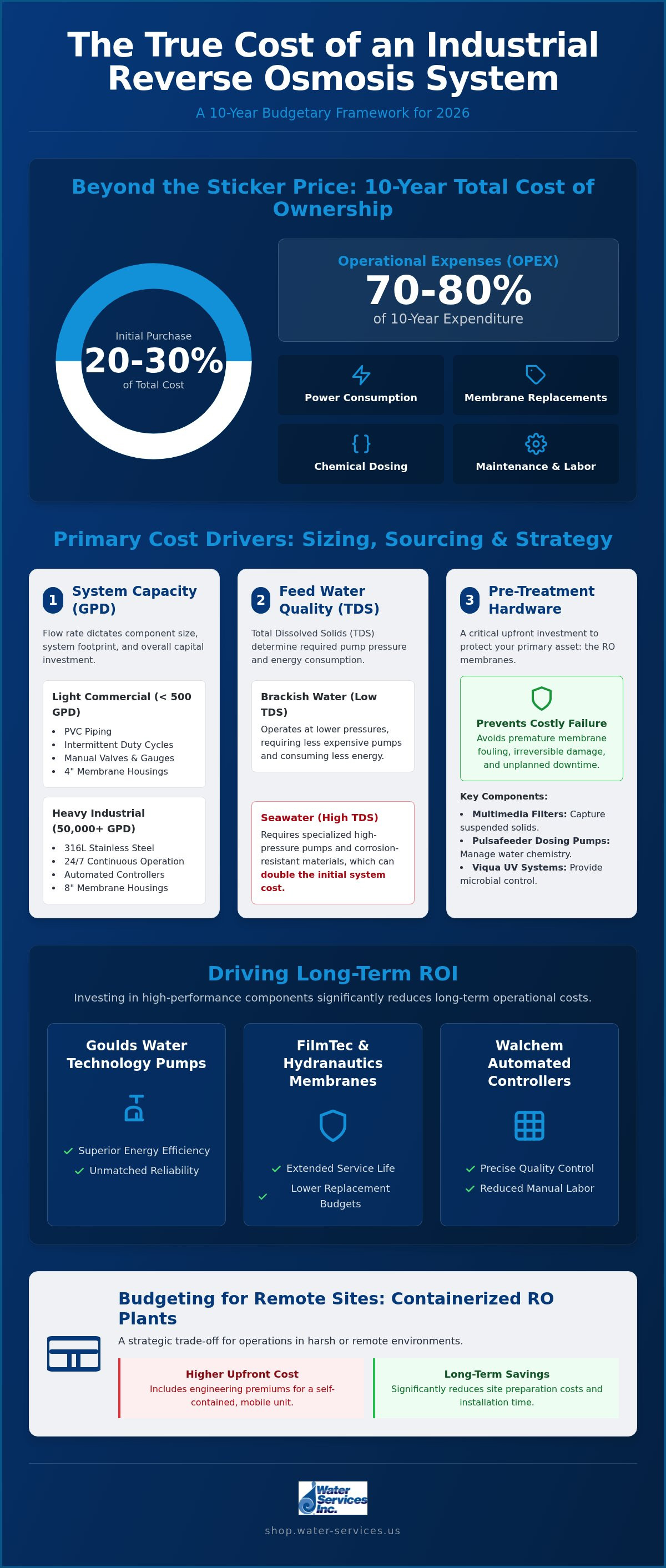
Initial capital expenditure (CAPEX) represents the smallest portion of a system's lifecycle. Industry benchmarks indicate that the purchase price accounts for only 20 to 30 percent of the total 10 year industrial reverse osmosis system cost. The remaining 70 to 80 percent is consumed by power, chemical dosing, and membrane replacements. Engineers use the "Cost Per Gallon" metric as the gold standard for evaluating these long term financial commitments. This metric combines the amortized equipment cost with ongoing operational expenses (OPEX) to provide a true picture of fiscal efficiency. Selecting high quality Reverse osmosis (RO) systems depends on balancing these upfront costs against the predictable expense of daily production.
Light Commercial vs. Heavy Industrial Systems
Hardware specifications vary significantly between light commercial units and heavy industrial skids. Light systems often utilize PVC piping and are designed for intermittent duty cycles. These are suitable for small scale applications where downtime is manageable. In contrast, heavy industrial systems require 316L stainless steel manifolding to withstand 24/7 continuous operation in demanding environments. Control complexity also shifts with the tier. Entry level units rely on manual valves and basic pressure gauges. High spec industrial systems integrate Walchem automated controllers and Signet flow sensors to maintain precise permeate quality without constant manual intervention. This automation increases CAPEX but drastically reduces the labor portion of OPEX.
The Role of System Capacity (GPD) in Pricing
Flow rate requirements define the physical footprint and component selection of the skid. A 500 gallon per day (GPD) system uses standard 4 inch membrane housings and small vertical multistage pumps. Moving to 50,000+ GPD configurations requires large 8 inch vessels and high volume Goulds Water Technology pumps. While larger systems require more capital, they benefit from economies of scale regarding energy efficiency and chemical consumption. Strategic "over sizing" is a common industry tactic. Running a larger system at a lower flux rate reduces the pressure on each membrane. This practice extends the service life of FilmTec or Hydranautics membranes and lowers the long term replacement budget. Understanding this relationship is critical for accurate industrial reverse osmosis system cost forecasting.
Technical Variables: What Drives the System Price Tag?
The source water profile is the primary architect of your capital budget. Brackish water systems typically operate at lower pressures, while seawater desalination requires specialized components to handle extreme salinity and corrosive environments. Research regarding global SWRO capital and operating costs highlights how these specialized requirements can double the initial industrial reverse osmosis system cost compared to standard groundwater applications. High TDS levels necessitate higher-pressure, more expensive pumps to overcome osmotic pressure.
Feed Water Chemistry and Pre-Treatment Hardware
Effective pre-treatment is a prerequisite for system longevity. Hardness, chlorine, and sediment must be removed before water enters the RO skid to prevent irreversible membrane damage. Multimedia filter tanks serve as the first line of defense, capturing suspended solids that would otherwise cause rapid fouling. Integrating these components into your design increases the upfront industrial reverse osmosis system cost, but it prevents the far greater expense of premature membrane failure. For facilities with biological concerns, Viqua UV systems provide a chemical-free method of microbial control, ensuring the feed water remains stable for downstream processing. You can browse our water treatment components to see the hardware required for these stages.
High-Performance Membranes and Housings
Membrane selection is a critical decision that impacts both salt rejection and energy efficiency. FilmTec membranes are recognized for their robust performance in challenging industrial water, while Hydranautics options provide specialized rejection for specific ions. The choice between these two brands depends on the final water quality required for your process. Housing materials also influence the price tag. Fiberglass reinforced plastic (FRP) housings are standard for many applications, but 316L stainless steel housings are necessary for high-pressure seawater or high-temperature environments. You can explore our range of high-performance RO membranes to find the exact specification for your project.
Pump selection is the final major technical driver. Goulds Water Technology pumps are the industry standard for high-pressure RO applications because they offer the durability required for continuous duty cycles. A reliable pump reduces operational downtime and ensures consistent system performance. When you're specifying your hardware, you can browse industrial pumps to ensure your system is built for long-term reliability.
Pre-Treatment and Post-Treatment: The 'Hidden' Infrastructure Costs
The core RO skid is rarely a standalone solution. Achieving the water quality required for industrial processes involves a series of peripheral systems that significantly impact the total industrial reverse osmosis system cost. These "hidden" infrastructure costs include chemical dosing, biological control, and the final distribution network. Neglecting these components during the budgeting phase leads to operational bottlenecks and accelerated hardware degradation. A complete system design must account for the hardware that supports the membrane's performance and the equipment that delivers the finished product to your facility.
Chemical Dosing and Scale Inhibition
Preventing mineral scale is the most effective way to protect your investment in FilmTec or Hydranautics membranes. This requires the integration of Pulsafeeder metering pumps to deliver precise amounts of antiscalant into the feed stream. When paired with Walchem automated controllers, these systems adjust dosing based on real-time flow and water chemistry. You can browse industrial water treatment components to see the required hardware for scale management. Precision control prevents the expensive mistake of over-dosing chemicals or, conversely, allowing scale to form and destroy membrane flux.
Disinfection and Polishing Stages
Biological fouling is a constant threat in industrial environments. Integrating Viqua UV systems provides a reliable method for neutralizing bacteria and viruses without altering water chemistry. Utilizing UV treatment reduces the need for costly chemical biocides, lowering your annual OPEX and simplifying safety protocols. For high-purity applications, post-treatment often includes activated carbon filters and sediment polishing to reach final water quality standards. These stages ensure that the permeate is ready for its intended use, whether that's boiler feed or ingredient water.
Storage and Distribution Infrastructure
The process doesn't end when water leaves the RO membrane. Permeate must be stored in atmospheric or pressurized tanks and then delivered to the point of use. This necessitates the use of Goulds centrifugal pumps for high-volume distribution. These pumps are engineered for continuous duty and high efficiency, ensuring consistent pressure throughout your facility. When calculating your industrial reverse osmosis system cost, you must account for the skid, the storage capacity, and the distribution network required to move water effectively. Each of these components adds to the initial price but is essential for a functional, long-term water treatment strategy.
Operational Expenses: Calculating Your 10-Year ROI
The total industrial reverse osmosis system cost is dominated by the expenses incurred after the initial commissioning. Over a ten year horizon, energy consumption and membrane replacement cycles represent the largest financial commitments. Facility managers who focus exclusively on the purchase price often overlook the fact that electricity alone can account for more than half of the system's lifetime expenditure. Accurate budgeting requires a structured analysis of these recurring costs alongside the technical strategies used to mitigate them. By selecting high efficiency components, you can shift the ROI curve in your favor, reducing the frequency of expensive hardware failures and lowering the cost per gallon produced.
Energy Efficiency and Pump Selection
Energy is the primary driver of OPEX in any reverse osmosis application. High pressure pumps must work continuously to overcome osmotic pressure, making their electrical draw a constant drain on resources. Integrating Variable Frequency Drives (VFDs) allows the system to adjust pump speed based on real time demand, which significantly reduces power consumption compared to fixed speed motors. The ROI of utilizing premium Goulds pumps is realized through their superior hydraulic efficiency and long service life. These units are engineered to meet stringent energy standards, ensuring that your facility isn't wasting capital on excessive utility bills. You can view industrial electric power and controls to see the VFD hardware necessary for these efficiency gains.
Membrane Life Extension Strategies
Membrane replacement is a significant recurring industrial reverse osmosis system cost. While high quality FilmTec and Hydranautics membranes are built for durability, their lifespan typically ranges from two to five years depending on the effectiveness of your pre-treatment and maintenance protocols. Implementing routine Clean-In-Place (CIP) procedures is a cost-effective way to restore flux and extend the service life of these elements. Monitoring performance is equally critical. Utilizing Ashcroft pressure gauges to track the differential pressure across membrane stages allows operators to identify fouling before it leads to catastrophic failure. This proactive approach prevents the need for emergency replacements and minimizes unscheduled downtime.
Beyond energy and membranes, your budget must account for annual consumables such as cartridge filters, O-rings, and chemical reagents. Labor for annual maintenance contracts and technical support during commissioning also forms a vital part of the fiscal landscape. A well maintained system with high spec monitoring equipment ensures that these costs remain predictable. If you're ready to optimize your facility's water treatment efficiency, browse our full inventory of industrial RO components to find the right hardware for your 2026 budget requirements.
Mobile and Containerized RO: Budgeting for Remote Sites
Remote industrial operations in the mining, oil, and military sectors require water treatment solutions that are both portable and resilient. Containerized Reverse Osmosis Plants are often the preferred choice for these environments because they offer a self-contained, weather-protected enclosure for sensitive components. When calculating the industrial reverse osmosis system cost for a remote site, the "Plug-and-Play" premium of a containerized unit must be weighed against the significant savings in on-site labor and infrastructure. Modular systems are engineered, assembled, and factory-tested before shipment, which reduces the risk of installation errors in geographically isolated regions.
Logistics and commissioning represent a substantial portion of the budget for global deployments. Shipping a modular plant to the Middle East or Africa involves specialized freight and customs considerations. However, the ability to rapidly deploy a functional system often justifies these costs. For short-term projects or emergency relief, mobile rental systems provide a flexible alternative to a permanent purchase. Leasing allows facilities to manage water quality without the long-term capital commitment of a full asset purchase, though the daily operational rate is typically higher than owned equipment.
The Value of Modular Engineering
Factory-tested containerized plants minimize the need for specialized technicians on-site during the initial setup. These units often feature climate-controlled enclosures to protect high-value hardware, such as Goulds pumps and Walchem controllers, from extreme ambient temperatures. This engineering approach ensures that the industrial reverse osmosis system cost remains predictable by avoiding the delays common with site-built infrastructure. For a deeper look at the technical specifications of these systems, you can read our sibling article on Industrial Water Treatment Systems: Engineering High-Purity Solutions for 2026.
Selecting the Right Partner for Global Deployment
Successful remote operation depends on more than just the initial purchase price. It requires a partner capable of providing technical support and a reliable supply chain for replacement parts. Maintaining a localized inventory of replacement sediment and carbon filters, along with FilmTec or Hydranautics membranes, is critical to preventing extended downtime. Without a strategic spare parts plan, the cost of emergency air-freight can quickly exceed the savings of a cheaper initial build. This logistical competence is what separates a standard supplier from a dependable industrial partner.
Stability and technical integrity are essential when managing water treatment in demanding commercial environments. If you're planning a remote installation, browse our complete catalog of industrial water treatment systems and components to ensure your project is equipped with the industry's most reliable hardware.
Strategic Budgeting for 2026 Water Treatment Infrastructure
Accurate forecasting for your 2026 water treatment project requires a shift from simple procurement to comprehensive lifecycle management. You've seen how the initial industrial reverse osmosis system cost serves only as a baseline. The true financial performance of your facility depends on the synergy between high-efficiency Goulds pumps and the rejection stability of FilmTec or Hydranautics membranes. By prioritizing modular, containerized engineering, you reduce on-site labor risks and ensure operational continuity in even the most demanding global environments.
Since 1994, our team has specialized in engineering high-purity solutions for the mining and military sectors. As an authorized distributor for industry-leading manufacturers, we provide the technical integrity required for long-term stability and logistical competence. You can secure your facility's water future with professional-grade Reverse Osmosis systems designed for maximum ROI. Investing in technical precision today ensures your facility remains productive and efficient for years to come.
Frequently Asked Questions
What is the average lifespan of an industrial reverse osmosis membrane?
The average lifespan of an industrial RO membrane typically ranges from two to five years. This duration depends heavily on the quality of pre-treatment and the consistency of Clean-In-Place (CIP) protocols. Utilizing high-performance FilmTec or Hydranautics membranes can extend this window by offering better resistance to fouling. Facilities that neglect chemical dosing or cartridge filter changes often see membrane life drop below two years, significantly increasing the long-term industrial reverse osmosis system cost.
How does feed water TDS affect the cost of an RO system?
Higher Total Dissolved Solids (TDS) levels directly increase the price of a system by requiring higher operating pressures. As TDS rises, the system must overcome greater osmotic pressure, necessitating high-pressure Goulds pumps and reinforced fiberglass or stainless steel housings. These heavy-duty components increase the initial industrial reverse osmosis system cost. Additionally, high-TDS feed water results in greater electrical consumption, which impacts your 10-year operational budget and overall ROI calculations.
Is it cheaper to rent or buy a mobile water treatment unit for a 6-month project?
For a 6-month project, renting a mobile water treatment unit is often more cost-effective from an OPEX perspective. Leasing avoids the large capital outlay of a permanent purchase and provides flexibility for short-term mining or military operations. However, if the project is likely to extend or if the equipment has high resale value, purchasing may offer better long-term equity. You should evaluate the total rental fees against the amortized cost of a containerized plant.
What are the typical maintenance requirements for a containerized RO plant?
Containerized RO plants require scheduled maintenance to ensure 24/7 operational reliability. This includes monthly inspections of high-pressure pumps, quarterly calibration of Walchem controllers, and semi-annual Clean-In-Place (CIP) procedures for the membranes. Operators must also replace sediment and carbon filters based on pressure differential readings from Ashcroft gauges. Proper maintenance within the climate-controlled enclosure prevents hardware degradation and ensures the system meets its engineered duty cycle in harsh environments like Africa or the Middle East.
Can I upgrade an existing industrial RO system to improve energy efficiency?
Yes, upgrading an existing system with Variable Frequency Drives (VFDs) and high-efficiency Goulds pumps can significantly reduce power draw. Replacing older elements with the latest FilmTec high-rejection membranes can also improve permeate quality and flux rates. These upgrades require an initial investment but often pay for themselves through lower utility bills and extended service intervals. Modernizing your control system with Signet flow sensors provides the data needed to optimize performance and reduce waste.
What pre-treatment is most critical for protecting high-cost RO membranes?
Scale inhibition and sediment removal are the most critical pre-treatment stages for protecting expensive membranes. Utilizing Pulsafeeder metering pumps to deliver precise antiscalant doses prevents mineral scaling that can permanently damage the membrane surface. Multimedia filter tanks and Pentair filter housings are also essential for removing suspended solids before they reach the RO skid. Effective pre-treatment is the primary factor in extending membrane life and reducing the frequency of unscheduled system downtime.
How much does a Goulds pump contribute to the overall reliability of the system?
A Goulds pump is a cornerstone of system reliability, specifically engineered for the continuous duty cycles required in industrial water treatment. These pumps minimize the risk of mechanical failure, which is a leading cause of facility downtime. Their high hydraulic efficiency directly lowers energy costs, while their robust construction ensures they can handle the high pressures required for brackish or seawater desalination. Investing in a Goulds pump reduces the frequency of expensive emergency repairs and technical support calls.
What are the regulatory costs associated with RO concentrate disposal?
Regulatory costs for concentrate disposal vary by region and often include permits, monitoring fees, and specialized discharge infrastructure. Facilities must comply with local environmental standards regarding the salinity and chemical content of the RO reject stream. In some jurisdictions, zero liquid discharge (ZLD) requirements can significantly increase the total project budget. You must account for these environmental compliance costs during the initial engineering phase to avoid unforeseen legal penalties or operational restrictions.
0 comentarios