

The chemical industry now accounts for 40% of global demand for high-precision dosing, yet many facilities continue to lose revenue to industrial chemical metering pumps that cannot withstand the pressure of 2026 regulatory standards. It's frustrating when a critical process is halted by a ruptured diaphragm or a pump that fails to maintain the 99% repeatable accuracy required for modern EPA compliance. You need hardware that integrates with your PLC and stands up to aggressive media without constant maintenance downtime.
This guide helps you master the technical criteria for selecting precision dosing equipment that meets the latest ASME B73.1-2020 and BPVC-2025 requirements. We'll show you how to reduce total cost of ownership through durable material selection and precise ANSI/HI 9.6.1-2024 NPSH margin calculations. You'll also learn why AODD technology is the rugged alternative for demanding industrial chemical transfer in harsh environments. We'll examine how to identify hardware from trusted manufacturers like Pulsafeeder to ensure your operations remain compliant with the March 2026 NESHAP final rules and updated PFAS monitoring mandates.
Key Takeaways
- Master the technical specifications required to achieve 99% repeatable accuracy and ensure regulatory compliance in chemical processing.
- Learn how to calculate flow rates in GPH and Total Dynamic Head (TDH) to select the most efficient industrial chemical metering pumps for your specific system hydraulics.
- Compare the precision of solenoid-driven metering pumps with the rugged, self-priming capabilities of AODD technology for handling high-volume slurries.
- Utilize a step-by-step decision matrix to map fluid viscosity, temperature, and chemical concentration against 2026 industrial standards.
- Identify the optimal housing materials, such as Aluminum or Polypropylene, to minimize corrosion and reduce the total cost of equipment ownership.
What is an Industrial Chemical Metering Pump and Why Does Accuracy Matter?
An metering pump is a specialized positive displacement device engineered to move a precise volume of liquid within a specific time period. Unlike standard centrifugal pumps that prioritize high-volume bulk transfer, industrial chemical metering pumps focus on delivery accuracy and repeatability. These systems are the backbone of automated chemical dosing. They ensure that exact concentrations of reagents enter a process stream regardless of system pressure fluctuations.
The hardware consists of three primary elements. The driver provides the power, typically using a solenoid, electric motor, or compressed air. The liquid end, or "wet end," contains the diaphragm or piston that contacts the fluid. Finally, the control interface manages the stroke length or frequency to adjust the flow rate. Most industrial applications require repeatable accuracy of +/- 1% to maintain process stability.
High-performance units also offer a significant turndown ratio. This metric defines the range over which the pump maintains its rated accuracy. A 100:1 turndown ratio means a pump with a maximum capacity of 100 GPH can accurately dose as little as 1 GPH. This flexibility is vital in variable process environments where chemical demand shifts based on real-time data.
The Impact of Precision on Operational ROI
Over-dosing chemicals in wastewater treatment directly increases annual operating expenses through reagent waste and higher sludge disposal costs. Under-dosing is equally dangerous. It leads to accelerated equipment corrosion, failed batch cycles, and potential environmental non-compliance fines. Modern 2026 sensors now integrate with industrial chemical metering pumps to allow for real-time dosing adjustments. This automation prevents costly deviations and protects your downstream assets.
Common Industrial Chemicals and Their Challenges
Handling aggressive fluids requires specific material science. Sulfuric acid, sodium hypochlorite, and various polymers present unique challenges for standard equipment. Sodium hypochlorite tends to off-gas, which can cause vapor lock in standard pump heads. High-viscosity polymers require larger valve seats to prevent clogging and flow restriction. Selecting specialized elastomers and housing materials is the only way to prevent premature diaphragm failure. You must match the pump material to the chemical concentration and temperature to ensure long-term reliability. This focus on material durability is a universal standard, similar to how Cabinet refinishing Denver uses specialized coatings to protect and revitalize kitchen surfaces against daily environmental stressors.
Essential Selection Criteria: Flow, Pressure, and Chemical Compatibility
Selecting industrial chemical metering pumps requires a precise evaluation of hydraulic demand and chemical interaction. You can't just pick a pump based on a single flow rate. You must calculate the peak Gallons Per Hour (GPH) or Liters Per Hour (LPH) while accounting for the maximum system backpressure. If the pump's pressure rating is lower than the system's Total Dynamic Head (TDH), the pump will fail to deliver the required dose, or worse, suffer a catastrophic motor failure.
Total Dynamic Head (TDH) is the cumulative resistance the pump must overcome. It includes:
- Static Head: The vertical distance from the liquid source to the injection point.
- Friction Loss: The resistance created by pipe walls, elbows, and valves.
- Injection Pressure: The internal pressure of the process line or vessel where the chemical is being delivered.
Sizing the Pump for Peak and Average Loads
It's a common mistake to oversize equipment for "safety." In reality, running a pump at 90% of its rated capacity is far better for longevity than running it at 10%. Operating at the lower end of the stroke range can lead to inconsistent check valve seating and reduced accuracy. If your process requires wide fluctuations in dosing, prioritize a pump with a high turndown ratio. For power, most industrial sites utilize 115V or 230V electric drivers, though air-powered configurations are often preferred in hazardous environments where electricity poses a spark risk.
Material selection determines the service life of your equipment. You must use comprehensive compatibility charts to match your specific fluid with PTFE, PVDF, or 316 Stainless Steel. High-temperature fluids or those with extreme pH levels require specialized elastomers like Viton or EPDM to prevent seal degradation. Environmental factors are equally critical. If your pump is located in a refinery or chemical plant, it may require ATEX or Class I Div 1 hazardous area certifications. Outdoor installations need NEMA 4X rated enclosures to protect against UV exposure and moisture.
Material Science: Choosing the Right Liquid End
Plastic liquid ends like Polypropylene or PVDF offer excellent resistance to corrosive acids at a lower cost. Metallic options like 316SS or Hastelloy provide the structural integrity needed for high-pressure or high-temperature applications. Internal components, specifically the diaphragms and check valves, must prevent backflow to maintain dosing integrity. These components are vital when integrating dosing units into complex industrial water treatment systems. Review our technical specifications for Pulsafeeder pumps to match your system hydraulics with the correct material build.
Comparing Technologies: Traditional Metering vs. AODD Pumps
Selecting the right hardware for industrial chemical metering pumps involves a critical choice between high-precision solenoid technology and the rugged versatility of Air Operated Double Diaphragm (AODD) systems. Traditional metering pumps prioritize exact volume control at low flow rates. AODD pumps offer a different set of advantages, specifically their ability to handle self-priming and run-dry conditions. These pumps use compressed air to move two diaphragms in a reciprocating motion, creating a vacuum that draws fluid into the chamber. This design allows the pump to operate without fluid for extended periods, preventing the motor burnout common in electric units.
The distinction between these technologies is most apparent when handling difficult media. Solenoid pumps are designed for clean, low-viscosity fluids. In contrast, AODD pumps are the superior choice for transferring viscous chemicals or abrasive slurries containing suspended solids. While AODD pumps are often categorized as transfer pumps, they can be adapted for dosing. By integrating high-quality pulse dampeners, you can eliminate the pressure spikes inherent in diaphragm motion. This smoothing effect allows for a steady flow that mimics the precision of a standard metering pump while maintaining the ruggedness of a heavy-duty transfer unit.
When to Use Solenoid-Driven Metering Pumps
Solenoid-driven pumps are the optimal choice for high-frequency, low-volume injection tasks such as pH adjustment or disinfectant dosing. Pulsafeeder Metering Pumps serve as a standard for this category due to their reliable solenoid actuators and precision stroke control. These units provide high turndown ratios, allowing operators to maintain accuracy even at 1% of the maximum flow. Modern models feature integrated digital control interfaces that communicate directly with plant SCADA systems. Their low energy footprint and minimal moving parts reduce long-term maintenance requirements in clean water applications.
The Case for AODD Pumps in Chemical Transfer
Ruggedness is the primary requirement in mining and oil and gas operations. AODD pumps provide a significant advantage in these sectors because they are air-powered. This eliminates the risk of electrical sparks in explosion-proof environments. These pumps are frequently utilized in mining wastewater treatment solutions to handle heavy chemical loads and abrasive tailings. The ability to pass solids up to the size of the internal check valves makes AODD technology indispensable for heavy-duty chemical handling. They provide a stable, low-maintenance solution for the most demanding industrial environments.
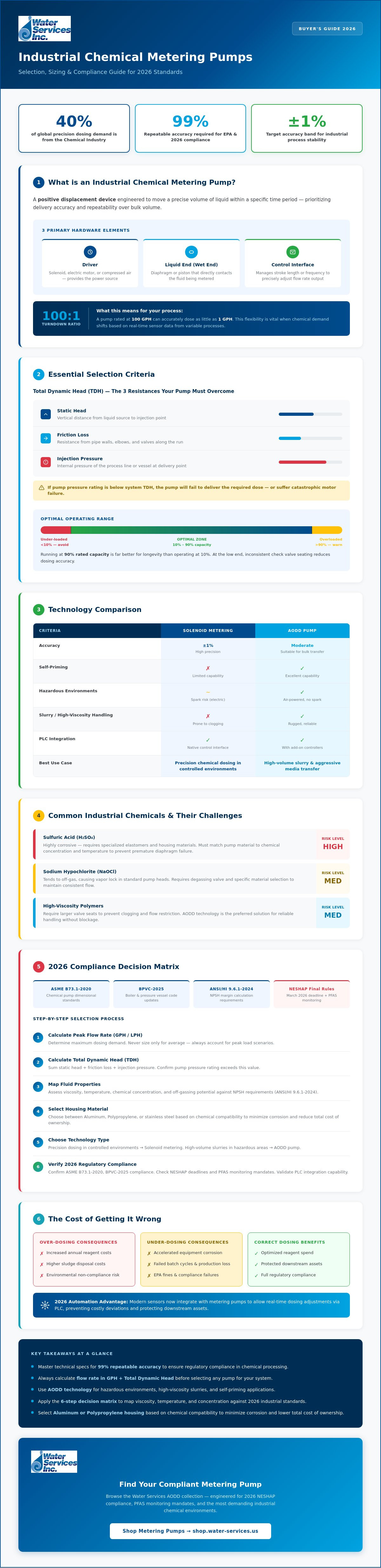
Step-by-Step Decision Matrix for 2026 Industrial Standards
Selecting industrial chemical metering pumps requires a structured engineering approach rather than relying on automated "black box" selection tools. A logical decision matrix ensures that every hydraulic and chemical variable is accounted for before procurement. This process minimizes the risk of system cavitation, chemical bypass, or premature motor failure. Follow these five steps to define your equipment specifications.
- Step 1: Define the fluid. Document the chemical concentration, temperature, and viscosity. Fluids exceeding 1,000 cPs often require high-viscosity liquid ends and spring-loaded check valves to ensure proper seating.
- Step 2: Map the hydraulics. Calculate the suction lift (NPSH), discharge head, and line friction. Ensure the pump's rated pressure exceeds the total dynamic head by at least 10% to provide a safety margin.
- Step 3: Select the drive type. Choose an electric solenoid for high-frequency, low-volume dosing. Motor-driven units are preferred for continuous, high-volume applications. Air-operated pumps are the standard for hazardous or explosive environments.
- Step 4: Determine control requirements. Decide if the pump needs manual stroke adjustment or external control via 4-20mA DC signals, pulse inputs, or BUS communication protocols for SCADA integration.
- Step 5: Add essential accessories. Install pressure relief valves (PRVs) to protect the pump and piping from over-pressurization. Use pulsation dampeners to create a laminar flow and calibration columns to verify dosing accuracy during commissioning.
Integrating Automation and Process Control
Modern efficiency standards require a closed-loop feedback system. Walchem Controllers manage these dosing cycles by processing data from pH, ORP, or conductivity sensors. Flow sensors provide the critical feedback loop necessary to maintain 2026 efficiency standards by adjusting pump speed in real-time. Dry run protection is a critical safety feature that automatically deactivates the pump when fluid is absent, preventing catastrophic damage to the liquid end and diaphragms.
Safety and PPE Considerations
Chemical dosing involves the movement of hazardous fluids under high pressure. System design must include secondary containment and leak detection sensors to mitigate the risk of environmental contamination. Operators must always utilize appropriate Personal Protective Equipment (PPE) during maintenance or calibration procedures. This includes chemical-resistant gloves, face shields, and aprons. To ensure your facility meets all current safety and performance mandates, browse our complete catalog of industrial chemical metering pumps and matching accessories.
Selecting Your Solution from the Water Services AODD Collection
Finalizing your procurement process requires a partner that understands the intersection of chemical compatibility and hydraulic reliability. Water Services, Inc. maintains a curated collection of over 428 AODD pumps designed to serve as the heavy-duty counterpart to traditional industrial chemical metering pumps. While solenoid pumps handle low-volume precision, our AODD systems provide the high-volume transfer and ruggedness needed for aggressive slurries and viscous reagents. Each unit in our inventory is selected based on its ability to perform in demanding environments where equipment failure isn't an option.
Purchasing from a specialized industrial distributor offers advantages that general equipment vendors can't match. You gain access to global engineering support and a deep inventory of replacement components. Our technical team evaluates your specific application to ensure the pump housing, diaphragms, and check valves are perfectly matched to your chemical profile. This specialized approach reduces the total cost of ownership by extending the mean time between failures (MTBF). Whether you're managing a local wastewater facility or a remote mining operation, we provide the logistical competence to deliver hardware where it's needed most.
Standout Products: Polypropylene vs. Aluminum
Material selection is the primary determinant of pump longevity. Polypropylene AODD pumps are the industry standard for handling aggressive acids, bases, and corrosive water treatment chemicals. The non-metallic construction ensures the housing won't pit or corrode when exposed to harsh reagents. For applications involving oils, lubricants, or non-corrosive chemical transfer, Aluminum AODD pumps offer a durable and cost-effective alternative. These units feature high-efficiency, stall-free air valves and impressive self-priming capabilities. They're engineered to handle solids-laden fluids without the clogging issues that plague smaller dosing units.
Why Water Services, Inc. for Your Dosing Infrastructure?
We bring over 30 years of experience in designing and deploying complex fluid handling systems. Our history includes engineering containerized water treatment plants for military applications and heavy-duty dosing skids for the mining sector. Operating from our Provo, Utah headquarters, we manage international distribution to ensure your site remains operational regardless of its geographic location. We don't just sell hardware; we provide the engineering depth to integrate these pumps into your existing PLC or SCADA architecture. Browse the complete collection of Air Operated Double Diaphragm Pumps to find the exact match for your industrial requirements. For sites with unique hydraulic challenges or remote logistical needs, contact our team for a custom engineering consultation.
Securing Your 2026 Dosing Infrastructure
Achieving 99% repeatable accuracy requires a rigorous approach to hydraulic calculations and material science. You've learned how to map system backpressure against Total Dynamic Head and why selecting the correct housing material is the only way to prevent premature diaphragm failure. Whether your facility utilizes solenoid-driven precision or the rugged transfer capabilities of AODD technology, your hardware must meet the strict 2026 ASME and EPA standards.
Water Services, Inc. has provided specialized water infrastructure solutions for mining and military operations across the globe since 1994. Precision is non-negotiable. From our headquarters in Provo, Utah, we manage international distribution for a curated selection of Pulsafeeder and Goulds technology. We ensure your industrial chemical metering pumps integrate seamlessly with modern PLC systems to maintain process integrity in the harshest environments.
For public facilities where water quality and structural safety are equally critical, you can explore Commercial Aquatic Infrastructure and Renovation to learn how specialized pool liners and surfacing protect large-scale aquatic assets from the effects of constant chemical exposure.
Take the next step in securing your chemical dosing infrastructure. View All 400+ Air Operated Double Diaphragm Pumps to find your industrial match. Reliable precision is within reach for your next project.
Frequently Asked Questions
What is the difference between a metering pump and a transfer pump?
Metering pumps prioritize precise volume control while transfer pumps focus on bulk fluid movement. A metering pump is a positive displacement device that delivers a specific, adjustable flow rate regardless of system backpressure. Transfer pumps usually prioritize high Gallons Per Minute (GPM) and don't offer the repeatable accuracy required for chemical dosing or regulatory compliance.
How do I choose between a solenoid and a motor-driven metering pump?
Select a solenoid-driven pump for low-volume, high-frequency injection tasks like pH control. Motor-driven industrial chemical metering pumps are the standard for high-flow applications or viscous fluids exceeding 1,000 cPs. Solenoid units provide excellent digital integration; motor-driven units offer the mechanical torque necessary to overcome high discharge pressures in continuous duty cycles.
Can AODD pumps be used for precise chemical dosing?
AODD pumps can perform dosing functions when they are integrated with high-performance pulsation dampeners. These dampeners remove the pressure spikes caused by the reciprocating diaphragms. This configuration is ideal for transferring abrasive slurries or high-viscosity chemicals that would cause a standard solenoid pump to fail. They offer a rugged, air-powered alternative for hazardous environments.
What materials are best for pumping highly corrosive acids?
PVDF and PTFE are the superior material choices for pumping highly corrosive acids. These fluoropolymers provide maximum chemical resistance across a wide temperature range. You must match these with specialized elastomers like Viton or EPDM for the check valves and O-rings. Using 316 Stainless Steel is typically reserved for non-corrosive chemicals or high-pressure solvent transfer.
How often should I replace the diaphragm in a chemical metering pump?
You should replace diaphragms every 2,000 to 5,000 hours of operation or at least once per year. The specific interval depends on the chemical concentration and the stroke length of the pump. Implementing a scheduled maintenance program prevents unplanned downtime. Modern systems often include leak detection sensors that alert operators before a full diaphragm rupture occurs.
What is a turndown ratio and why does it matter for my process?
Turndown ratio is the operational range over which a pump maintains its specified accuracy. If a pump has a 100:1 turndown ratio and a maximum capacity of 50 GPH, it can accurately dose as little as 0.5 GPH. This flexibility is critical for variable process streams where chemical demand changes based on real-time sensor data.
Do I need a pulsation dampener for my metering system?
Pulsation dampeners are required if your system uses rigid piping or sensitive downstream instrumentation. These devices absorb the kinetic energy from the pump's stroke, converting a pulsing flow into a steady, laminar stream. This protects your piping from fatigue and ensures that flow sensors provide accurate data for your control system.
What are the electrical requirements for industrial metering pumps in 2026?
Electrical requirements for 2026 emphasize digital connectivity and environmental protection. Most units require 115V or 230V single-phase power with integrated 4-20mA DC or BUS communication for PLC integration. Enclosures must meet NEMA 4X or IP66 standards for corrosion resistance. Sites with explosive atmospheres require Class I Div 1 motors or air-powered drivers.
0 comentarios