

With the global dewatering pump market projected to reach $3.7 billion in 2026, the financial stakes for technical accuracy have never been higher. When you are designing a mine dewatering system, a single miscalculation in total dynamic head or slurry abrasive index can lead to immediate motor burnout and catastrophic pump failure. You understand the frustration of constant maintenance cycles caused by aggressive acid mine drainage and abrasive solids. It is a common struggle to balance high hydrostatic pressure requirements with the need for chemical compatibility to ensure downstream treatment viability.
This guide helps you master the specific technical metrics and material standards needed to select high-performance hardware for the most demanding environments. We provide a deep dive into Goulds Water Technology specifications, the latest 2026 IE motor efficiency mandates, and strategies for achieving seamless integration with containerized treatment plants. By focusing on precision engineering and MSHA compliance, you can significantly reduce Total Cost of Ownership and extend Mean Time Between Failures for your most critical assets. We will also explore how IoT remote monitoring and Zero Liquid Discharge trends are reshaping equipment selection for the current fiscal year.
Key Takeaways
- Learn how to accurately calculate Total Dynamic Head (TDH) and peak surge requirements to prevent motor burnout and maximize energy efficiency.
- Identify high-chrome white iron and specialized material standards required to handle abrasive slurries and corrosive acid mine drainage without frequent failure.
- Master a step-by-step technical framework for designing a mine dewatering system that balances mechanical performance with chemical compatibility requirements.
- Discover the advantages of integrating Goulds Water Technology pumps with containerized treatment plants to extend Mean Time Between Failures (MTBF).
- Understand the impact of 2026 MSHA and EPA regulation updates on pump specifications and site-specific environmental compliance.
Defining Mine Dewatering Pump Specifications: Engineering for Compliance and Safety
Mine dewatering is the specialized engineering process of removing groundwater, process water, and surface runoff from active mining areas. It's a critical safety requirement that maintains structural stability and allows for equipment access. Unlike general industrial water pumps, mine-grade specifications must account for extreme hydrostatic pressure and high solids concentrations. When designing a mine dewatering system, mechanical reliability is the most important metric. Standard centrifugal pumps fail because they lack the metallurgy and seal designs needed for the rigors of a mine site.
Solids handling capacity prevents premature impeller erosion and catastrophic seal failure. In abrasive environments, pump life is determined by the hardness of the internal components. 2026 engineering standards demand higher precision when classifying "Clean Water" versus "Dirty Water" systems. This classification determines whether a site utilizes a standard centrifugal unit or a heavy-duty slurry pump. Authorized distributors of Goulds Water Technology Pumps provide the technical data sheets required to match pump metallurgy to specific fluid profiles.
The Mining Environment: Impact on Technical Requirements
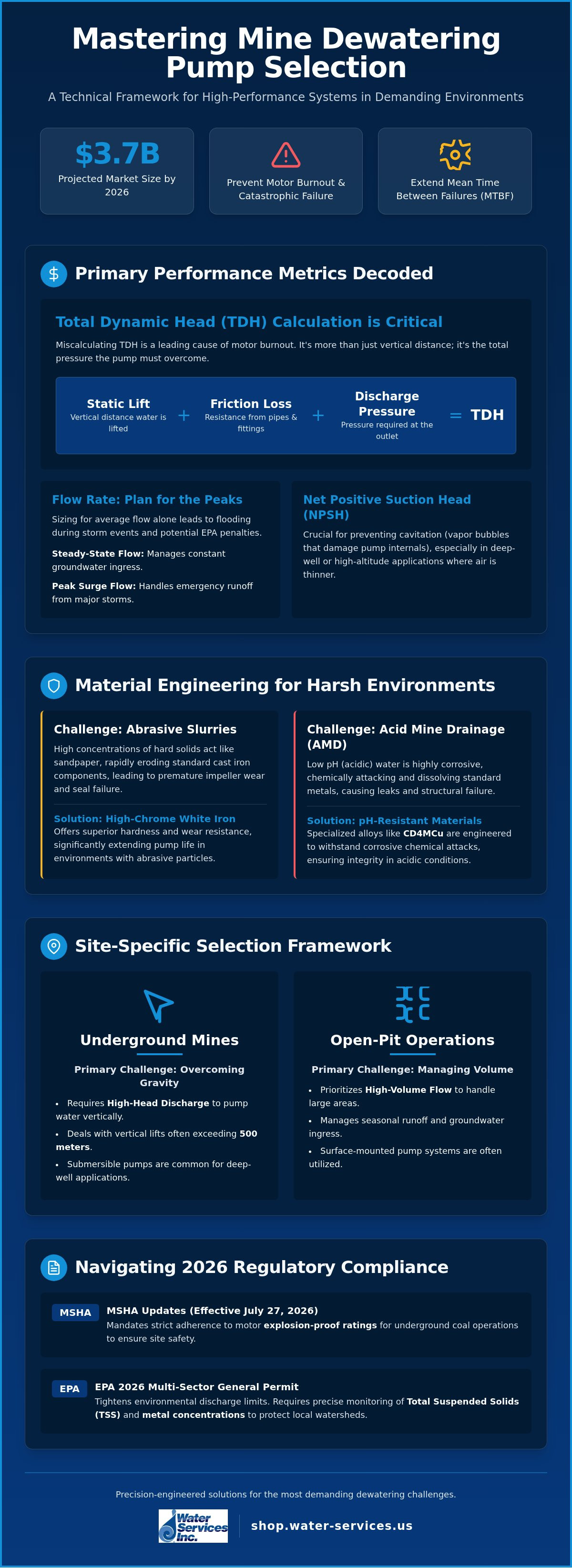
Underground and open-pit environments present vastly different hydraulic challenges. Underground mines focus on high-head discharge to overcome vertical lifts often exceeding 500 meters. Open-pit operations prioritize high-volume flow to manage seasonal runoff and groundwater ingress. Acid Mine Drainage (AMD) presents a chemical challenge that requires pH-resistant materials like CD4MCu or high-chrome iron. Temperature and altitude also play a role. High-altitude sites served by Provo-engineered systems require derated motors to account for thinner air and reduced cooling efficiency. Engineers must verify the NPSH requirements to prevent cavitation in these thin-air environments.
Regulatory and Compliance Specifications
The regulatory landscape in 2026 is defined by the MSHA updates effective July 27, 2026, and the EPA 2026 Multi-Sector General Permit. These rules mandate strict adherence to motor explosion-proof ratings for underground coal operations. Environmental discharge limits are also tightening. Pumps are no longer standalone units; they must function as part of a larger treatment cycle. Dewatering Compliance is the intersection of flow volume and effluent quality. Meeting these standards requires precise monitoring of total suspended solids (TSS) and metal concentrations before the water leaves the site perimeter. This ensures that dewatering activities don't impact local watersheds or trigger EPA violations.
Primary Performance Metrics: Flow, Total Dynamic Head (TDH), and Efficiency
Designing a mine dewatering system requires a rigorous approach to hydraulic calculations. Engineers must distinguish between steady-state drainage and peak surge requirements. Steady-state flow accounts for constant groundwater ingress, while peak surge addresses emergency runoff from major storm events. Under the proposed 2026 EPA Multi-Sector General Permit, managing these surges is critical for water quality compliance. A pump sized only for average flow will fail during a surge, leading to site flooding and environmental penalties. Accurate flow metering ensures the system remains within its efficient operating range.
Total Dynamic Head (TDH) is the sum of static lift, friction loss, and discharge pressure. Many operators mistakenly rely on static head alone. This oversight results in motor burnout as the pump operates too far to the right of its curve. Additionally, Net Positive Suction Head (NPSH) must be monitored to prevent cavitation, especially in deep-well applications. A practical analysis of mine dewatering confirms that field data analysis is the only way to ensure the selected system curve matches actual site conditions. When you are designing a mine dewatering system, calculating the power-to-flow ratio is essential for optimizing motor horsepower and reducing energy consumption.
Calculating TDH for Complex Mining Pipe Runs
Static head is the vertical distance the fluid must travel. Friction head is dynamic and increases with the square of the flow rate. In long discharge lines, pipe diameter significantly impacts friction loss. Using a smaller pipe might save on initial capital costs, but it increases the required motor horsepower and energy consumption over the pump's lifecycle. Proper sizing ensures the system integrates seamlessly with downstream Industrial Water Treatment Systems that require specific inlet pressures for membrane protection.
Motor Efficiency Standards: IE4 and IE5 Specifications
Energy costs represent a major portion of the Total Cost of Ownership (TCO). For 2026, specifying IE4 Super Premium or IE5 Ultra Premium motors is essential to meet global efficiency mandates. These motors maintain high efficiency even under partial loads, which is common in dynamic dewatering environments. Variable Frequency Drives (VFDs) allow the pump to adjust to varying inflow rates, reducing mechanical stress and extending the Mean Time Between Failures (MTBF). You should also verify voltage requirements for remote installations. Most global mining sites operate on 460V, 575V, or 1000V systems. You can find high-durability electric power controls designed for these specific industrial voltages to ensure stable operation and protection against power fluctuations.
Material Engineering: Wear Resistance and Corrosion Protection Specs
When designing a mine dewatering system, the selection of internal metallurgy determines the Mean Time Between Failures (MTBF). Mining fluids are rarely clean water. They often contain suspended solids, ranging from fine silts to rock fragments between 0.75 and 1.0 inches in diameter. High-Chrome White Iron, containing 25–30% Chromium, is the industrial standard for these extreme slurry conditions. This material provides the necessary hardness to resist the scouring action of quartz and other abrasive minerals found in mine sumps. It's a utilitarian choice that prioritizes component longevity over initial capital expenditure.
While High-Chrome iron excels in abrasive resistance, it has limitations in chemically aggressive environments. In high-salinity or low-pH environments characteristic of Acid Mine Drainage (AMD), Duplex Stainless Steel is the superior choice. Specifically, when the pH drops below 4.0, standard chrome iron components experience rapid chemical pitting that compromises structural integrity. Duplex alloys provide a balance of mechanical strength and corrosion resistance that chrome iron cannot match. Elastomer selection is equally critical for system reliability. Viton is specified for high-temperature or chemical-heavy applications, while EPDM is suitable for general water handling where petroleum-based lubricants aren't present.
Hardness Metrics and Impeller Wear Life
The Brinell Hardness Number (BHN) is the primary metric for evaluating wear resistance in pump impellers. A minimum of 600 BHN is standard for high-wear components in abrasive dewatering. There's a direct, non-linear relationship between pump RPM and material erosion rates. Increasing the speed of a pump by 20% can more than double the wear rate on the impeller and volute. When designing a mine dewatering system, engineers should prioritize larger pumps running at lower speeds to maximize component life. This strategy reduces the kinetic energy of solids impacting the internal surfaces, preserving the protective oxide layers of the metal and reducing total cost of ownership.
Sealing and Bearing Protection
Mechanical seals are the most common point of failure in dewatering pumps. Silicon Carbide (SiC) seals offer excellent thermal conductivity and hardness, making them ideal for standard abrasive duties. Tungsten Carbide is often preferred for high-shock applications where mechanical impact from large solids is a risk. Dual mechanical seals with independent oil chambers provide essential dry-run protection, allowing the pump to operate during "snore" conditions without seal face damage. For maintenance crews performing repairs on units exposed to acidic or chemically treated water, utilizing specialized Personal Protective Equipment (PPE) is a mandatory safety protocol to prevent skin contact with residual hazardous fluids.
Site-Specific Selection: A Framework for Submersible vs. Surface Systems
Selecting the correct hardware for a mine site requires a structured engineering approach. When designing a mine dewatering system, you must first analyze the fluid chemistry and solids percentage. High concentrations of abrasive grit dictate a move toward hardened slurry pumps, while low-pH environments require duplex stainless steel. Once the fluid profile is established, you must determine the Total Dynamic Head (TDH) and plot the required system curve. This ensures the pump operates within its preferred operating range (POR), preventing the cavitation and vibration issues discussed in previous sections.
The third step involves selecting between submersible and horizontal centrifugal units based on the physical constraints of the site. Submersible pumps are often preferred for their small footprint and ability to operate in flood-prone areas. Conversely, horizontal centrifugal pumps offer easier access for routine maintenance and are typically used for high-volume surface applications. The final steps include evaluating power availability, specifying control requirements like Variable Frequency Drives (VFDs), and calculating the Total Cost of Ownership (TCO). This comprehensive framework ensures that the selected equipment meets both hydraulic requirements and long-term financial goals.
When to Specify Submersible Units for Underground Galleries
Submersible units are the primary choice for flood-prone underground galleries. They eliminate the need for long suction lines and can operate entirely submerged during unexpected water ingress. For high-head surface drainage or pit dewatering, horizontal multistage pumps are often more efficient at overcoming extreme vertical lifts. These surface-mounted units provide stable performance for permanent installations. For temporary setups or emergency drainage, engineers should refer to Mining Wastewater Treatment Solutions to ensure temporary infrastructure remains compliant with effluent standards.
Total Cost of Ownership (TCO) and Rental vs. Purchase
Total Cost of Ownership (TCO) includes the initial purchase price, energy consumption, and the cost of spare parts over the pump's lifecycle. Designing a mine dewatering system with modularity in mind reduces downtime during repairs. Modular components allow for rapid replacement of high-wear parts like impellers and wear plates without removing the entire pump from the line. While purchasing is standard for long-term operations, rental solutions are more cost-effective for seasonal dewatering or short-term project phases. You can access high-durability Water Services rental solutions to manage temporary surge requirements without a major capital investment. This approach allows you to deploy Goulds Water Technology hardware for specific durations while maintaining predictable operational budgets.
Evaluate your current site requirements and browse our full inventory of mine-grade pumps to find the exact technical match for your dynamic head and flow specifications.
Implementing Integrated Solutions with Goulds Water Technology
Goulds Water Technology represents the industrial standard for reliability in high-pressure mining applications. Water Services, Inc. leverages over 30 years of global project engineering experience, dating back to our founding in 1994, to deliver these solutions to sites from our headquarters in Provo, Utah, to remote operations in Africa. Designing a mine dewatering system in 2026 requires more than just simple water evacuation. It involves a total water management strategy where pumps are integrated with containerized Reverse Osmosis (RO) and mobile ultrafiltration units. This integration supports Zero Liquid Discharge (ZLD) goals and ensures that every gallon moved meets strict effluent quality standards before it leaves the site perimeter.
System health depends on precise monitoring and control. Custom control panels equipped with Ashcroft pressure gauges and Signet flow sensors provide the real-time data needed to maintain hydraulic stability. These components work together to protect the pump from operating outside its curve, which prevents the mechanical failures discussed in previous sections. By selecting hardware that is designed for seamless communication between the pump and the treatment plant, you reduce the complexity of site logistics and improve overall operational uptime.
Feed Pump Specs for Mining RO Systems
Dewatering pumps often function as the primary feed source for downstream purification. When you are designing a mine dewatering system, these pumps must provide consistent, pulse-free pressure to FilmTec RO Membranes. Pressure fluctuations can lead to membrane compaction or bypass, compromising the entire treatment cycle. Pre-filtration using multimedia filter tanks or Harmsco filtration products is necessary to protect high-value pump internals and sensitive membranes from residual silt. Walchem controllers manage the automated dosing of antiscalants and adjust pump speeds via VFDs to maintain the exact flux required for optimal salt rejection.
Modular System Integration and Monitoring
Rapid deployment is a critical requirement for dynamic mining environments. Skid-mounted pump stations provide a turnkey solution that combines high-durability Goulds Pumps with specialized Electric Power Controls. These modular units are pre-wired and factory-tested to ensure immediate functionality upon arrival at the mine site. This modularity reduces the time spent on field assembly and allows for easy relocation as the mine face advances. Utilizing a single-source provider for both the pumping hardware and the control logic eliminates the integration conflicts often found in multi-vendor configurations.
Explore our full range of Industrial Pumps at Water Services, Inc. to find engineered solutions for your most demanding dewatering and treatment applications.
Optimizing Mine Water Infrastructure for 2026 and Beyond
Success in designing a mine dewatering system depends on the precise alignment of hydraulic performance with material durability. As mining depths increase and environmental mandates like the 2026 EPA Multi-Sector General Permit tighten, the margin for error in equipment selection has disappeared. You've seen how specifying High-Chrome White Iron and Duplex Stainless Steel protects against premature erosion and chemical pitting. We've also detailed why IE4 and IE5 motor efficiency standards are now the baseline for reducing long-term operational costs and achieving sustainability goals.
Water Services, Inc. serves as an authorized Goulds distributor, providing the global shipping and engineering support required for complex modular system design. Our technical team ensures your pumping hardware integrates seamlessly with containerized treatment assets to maximize uptime. Browse our selection of Goulds Water Technology Pumps to secure hardware that meets these rigorous 2026 specifications. You can build a more resilient and compliant operation by prioritizing technical integrity today.
Frequently Asked Questions
What are the most critical specifications for a mine dewatering pump?
The most critical specifications include Flow Rate, Total Dynamic Head (TDH), and Net Positive Suction Head (NPSH). You must also evaluate material hardness, typically measured in Brinell Hardness Number (BHN), to ensure the pump survives abrasive solids. Chemical compatibility, specifically pH levels for acid mine drainage, determines if you need high-chrome iron or duplex stainless steel. These technical metrics ensure the pump operates within its efficient range without premature mechanical failure.
How do I calculate Total Dynamic Head (TDH) for a deep mine?
Total Dynamic Head (TDH) is calculated by adding the static head to the friction head losses within the discharge piping. Static head is the total vertical distance the fluid must travel. Friction head is the resistance caused by pipe length, diameter, and interior surface roughness. When you are designing a mine dewatering system, accurate TDH calculations prevent motor overload and ensure the pump curve intersects correctly with the system curve for stable operation.
What material is best for pumping acidic mine water?
Duplex stainless steel or CD4MCu alloys are the most effective materials for pumping acidic mine water with low pH levels. While high-chrome white iron provides excellent abrasion resistance, it is susceptible to rapid chemical corrosion in acidic environments. Duplex alloys offer a superior balance of mechanical strength and corrosion resistance. This selection is vital for maintaining structural integrity in sites where acid mine drainage (AMD) is a primary concern.
Can I use a standard centrifugal pump for mine dewatering?
Standard centrifugal pumps are typically unsuitable for mine dewatering because they lack the robust metallurgy and seal designs required for abrasive environments. Mining operations involve suspended solids that cause rapid erosion in standard cast iron or bronze internals. Mine-grade pumps, such as those from Goulds Water Technology, feature hardened wear plates and high-chrome impellers. These specialized components extend the Mean Time Between Failures (MTBF) in demanding industrial settings.
How much solids content can a mining dewatering pump handle?
Mining dewatering pumps are engineered to handle solids ranging from 0.75 inches to 1.0 inch in diameter, depending on the specific model and impeller design. Slurry pumps can manage even higher concentrations of suspended solids by weight. It's essential to match the pump's solids handling capacity to the actual sump conditions. Oversized fragments can clog the volute or damage the impeller, leading to immediate downtime and increased maintenance costs.
What is the benefit of using a VFD with a dewatering pump?
Variable Frequency Drives (VFDs) allow for dynamic flow management by adjusting the motor speed to match real-time inflow rates. This capability prevents the pump from cycling on and off too frequently, which reduces mechanical stress on the seals and bearings. Using a VFD also significantly lowers energy consumption by allowing the system to operate at lower speeds during periods of steady-state drainage. It is a critical component for optimizing system efficiency.
How do 2026 energy standards affect pump motor specifications?
The 2026 energy standards mandate the use of IE4 Super Premium or IE5 Ultra Premium efficiency motors for industrial pumping applications. These regulations aim to reduce the carbon footprint and electrical costs of large-scale operations. When you are designing a mine dewatering system, specifying these high-efficiency motors is necessary for regulatory compliance. They maintain higher efficiency levels across a broader range of the pump curve, resulting in a lower Total Cost of Ownership.
Should I choose a submersible or a horizontal pump for my site?
Submersible pumps are the preferred choice for underground galleries or flood-prone areas where space is limited and suction lift is an issue. They operate entirely underwater, eliminating the need for complex suction piping. Horizontal centrifugal pumps are better suited for permanent surface installations where high-volume flow is required. Horizontal units offer easier access for routine maintenance and are generally easier to inspect without specialized retrieval equipment.
0 comentarios