

The most expensive component of your water infrastructure isn't the hardware; it's the cost of regulatory non-compliance and unplanned operational downtime. As the EPA moves to rescind specific PFAS maximum contaminant levels in May 2026 while states like Maine and New Jersey enforce stricter local bans, selecting the right industrial water filtration systems has become a complex moving target. You're likely dealing with the high cost of frequent membrane replacements and the risk of system failure in remote or harsh environments. Managing these variables requires a shift from reactive repairs to a strategy of planned modularity and technical precision.
We recognize that technical integrity and logistical stability are the foundations of a reliable facility. This guide helps you master the technical specifications and selection criteria necessary to ensure operational uptime through 2026 and beyond. You'll learn how to reduce operational costs and simplify maintenance by sourcing standardized components like FilmTec RO membranes and Goulds Water Technology pumps. We'll also cover how to align your procurement strategy with the latest PRISM reporting deadlines and the industry shift toward smart, sensor-driven filtration hardware that targets contaminants at a molecular level.
Key Takeaways
- Distinguish industrial hardware requirements from residential standards by evaluating specific flow rates, pressure ratings, and durability for process and discharge water.
- Implement a multi-stage filtration framework combining pre-filtration, primary treatment, and polishing to achieve exact purity levels for demanding environments.
- Utilize data-driven water analysis to select industrial water filtration systems that align influent quality with consumable replacement cycles to maintain regulatory compliance.
- Calculate the total cost of ownership by analyzing the ROI of automated monitoring and how Walchem controllers prevent premature membrane fouling.
- Identify high-performance hardware synergies between industry-standard brands like Pentair, Viqua, and Harmsco to maximize long-term system reliability.
Understanding the Scope of Industrial Water Filtration Systems
Industrial water filtration systems aren't just scaled-up versions of residential filters. They're engineered solutions designed to remove specific contaminants from high-volume streams for process, drinking, or discharge purposes. While a home unit focuses on basic taste and odor, industrial-grade hardware must manage high total dissolved solids (TDS), heavy metals, and complex biological loads. These systems serve as the first line of defense for expensive downstream equipment. For example, removing abrasive particulates is a technical necessity to prevent premature impeller wear in high-performance Goulds pumps.
In 2026, the industry has embraced "planned modularity." This involves the use of containerized reverse osmosis plants and mobile ultrafiltration systems for remote mining sites or military deployments. These formats provide a stable, scalable water source in environments where permanent infrastructure is either too slow to build or logistically impossible to maintain. The focus is on technical integrity and the ability to swap standardized components quickly to ensure operational uptime.
Process Water vs. Wastewater Treatment
The technical standards for Industrial water treatment processes depend heavily on whether the water is intended for internal use or environmental discharge. Process water for boiler feed or high-precision manufacturing requires extremely low mineral content to avoid scale buildup. Conversely, wastewater treatment is governed by EPA mandates and local regulations, such as the 2026 PFAS restrictions enacted in states like New Jersey and Maine. Your choice of technology will shift based on the influent source:
- Surface Water: Requires robust multimedia filter tanks to manage high turbidity and organic matter.
- Brackish Groundwater: Demands high-rejection RO membranes to handle elevated salinity levels.
- Industrial Runoff: Often requires specialized chemical antiscalants and Walchem controllers to manage fluctuating pH and mineral spikes.
The Logistics of High-Volume Filtration
Industrial logistics are defined by massive flow rates, often ranging from 300 GPD to more than 50,000 GPD. Handling these volumes requires hardware that can withstand extreme pressure and chemical exposure. Material compatibility is a critical procurement factor; you must choose between stainless steel for high-pressure durability and specialized polymers for corrosive chemical handling. Because these systems operate under significant mechanical stress, safety is paramount. Operators must use appropriate PPE during high-pressure system maintenance to protect against potential leaks or hardware failure. Standardizing your fleet with components like Ashcroft pressure gauges and Signet flow sensors ensures that your facility maintains accurate real-time data for both operational uptime and regulatory reporting.
Comparing Core Technologies: RO, UV, and Multimedia Filtration
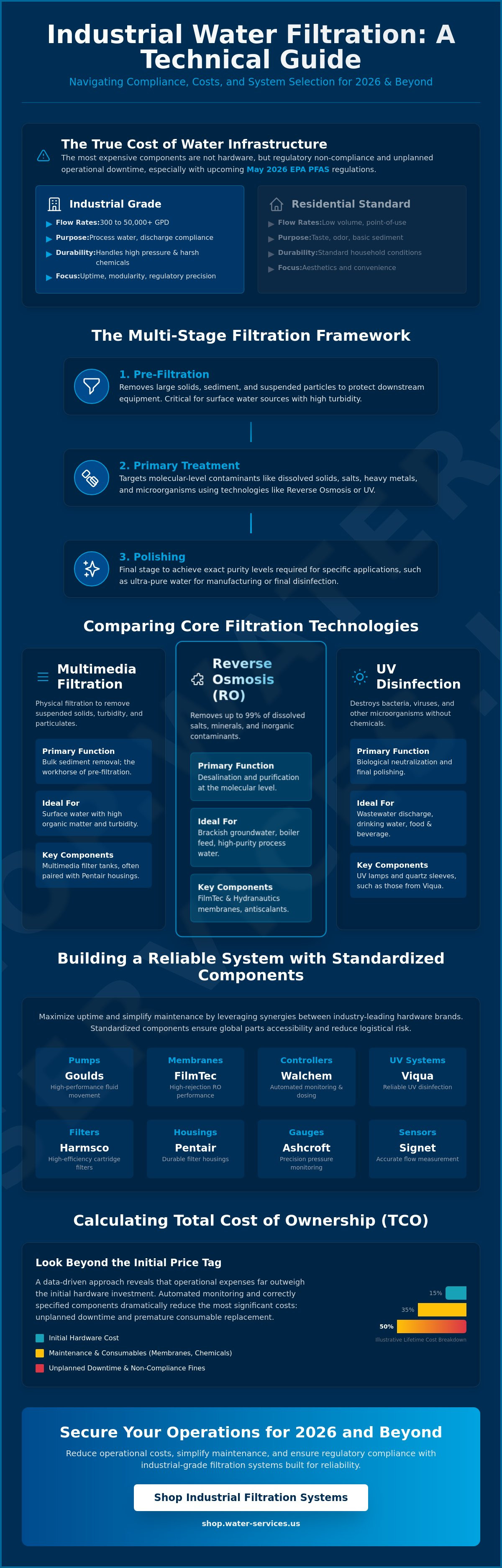
Selecting industrial water filtration systems requires a framework that categorizes technologies into physical, chemical, and biological filtration. Efficient system design never relies on a single technology. It uses a multi-stage approach. This typically includes pre-filtration to remove large solids, primary treatment for molecular-level contaminants, and a final polishing stage for specific purity requirements. For detailed engineering specifications, consult our industrial water treatment systems engineering guide. Utilizing standardized components, such as Pentair filter housings and FilmTec membranes, ensures that replacement parts remain globally accessible, reducing logistical risk and operational downtime.
Reverse Osmosis (RO) for Dissolved Solids
Reverse Osmosis remains the industry standard for removing up to 99% of dissolved salts and inorganic contaminants. FilmTec membranes are often preferred for their high flux and durability in standard industrial applications. In contrast, Hydranautics membranes provide specialized high-rejection performance for high-salinity brackish water sources. To maximize the lifespan of these expensive components, the application of water treatment antiscalants is critical. These chemicals prevent mineral scaling on the membrane surface, which is a leading cause of premature system failure in high-pressure environments.
UV Sterilization for Microbiological Control
Microbiological control is achieved through UV sterilization. Viqua UV systems utilize specific wavelengths to disrupt the DNA of bacteria and viruses, providing a chemical-free disinfection method. This is essential for process water loops in food, beverage, and medical sectors where chemical additives might compromise product integrity. Effective operation depends on strict maintenance schedules. This includes annual UV lamp replacement cycles and periodic cleaning of quartz sleeves to ensure maximum UVC penetration. Following Industrial Water Treatment Operation and Maintenance protocols ensures these systems meet the high-reliability standards required for mission-critical applications.
Multimedia and Sediment Filtration
Multimedia and sediment filtration function as the primary defense against Total Suspended Solids (TSS). These systems use layers of sand, anthracite, and garnet to trap particulates before they reach sensitive RO membranes. Multimedia filter tanks are categorized by their ability to handle high flow rates while maintaining low pressure drops. Managing these systems effectively requires precise backwashing cycles. Automated Walchem controllers allow operators to schedule backwashes based on pressure differentials or time intervals. This ensures the media stays clean without manual intervention. If you're looking to upgrade your current infrastructure, exploring a curated water treatment collection can help identify compatible hardware for your specific flow requirements.
Critical Selection Criteria for Industrial Procurement
Procurement for industrial water filtration systems must be entirely data-driven. It starts with a comprehensive water analysis. This raw data dictates the required filtration stages and the specific rejection rates needed for compliance. Adhering to standards set by the Water Quality Association (WQA) ensures that the system design meets industry-recognized benchmarks for performance and safety. There's a direct correlation between influent water quality and the frequency of consumable replacement. High turbidity or mineral content leads to faster fouling of sediment filters and RO membranes.
Logistics also play a major role in selection. You must evaluate the system footprint based on site accessibility. Stationary plants offer long-term stability for permanent facilities, while mobile containerized units provide flexibility for temporary projects or remote deployments. Optimal performance is achieved when you integrate mechanical filtration with specialized water treatment chemicals. Using antiscalants and biocides in conjunction with physical barriers prevents biological growth and mineral scaling. This approach protects the technical integrity of the entire system.
Flow Rate and Pressure Requirements
System sizing requires calculating peak demand rather than just average daily consumption. If a system's undersized for peak flow, filtration efficiency drops. Pressure spikes can also damage components. You must select pumps, such as those from Goulds Water Technology, that accurately match the calculated pressure drop across the filtration media. Environmental factors like temperature and viscosity impact flux. Colder water's more viscous and requires higher pressure to pass through RO membranes. This technical detail's often overlooked in procurement stages.
Contaminant-Specific Remediation
Different industries face unique chemical profiles. Mining operations require targeted remediation for heavy metals and acidic runoff, as detailed in our guide on mining wastewater treatment solutions. In the oil and gas sector, the focus shifts to hydrocarbon removal and managing produced water. For remote drinking water systems, the priority's often the reduction of arsenic and nitrates to meet health standards. Each contaminant requires a specific technical approach, whether it's ion exchange, specialized media, or high-rejection membranes.
Total Cost of Ownership: Maintenance and ROI
Evaluating the total cost of ownership (TCO) for industrial water filtration systems requires a move beyond initial capital expenditure (CapEx). A comprehensive financial analysis must account for operational expenditure (OpEx), including energy and chemical consumption, and long-term maintenance requirements. Automated monitoring provides a high return on investment (ROI) by preventing catastrophic hardware failure. For instance, Walchem controllers utilize real-time sensor data to manage backwash cycles and chemical dosing, which directly protects the technical integrity of your membranes.
Reliability depends on the quality of standardized components. Sourcing high-performance replacement parts from manufacturers like Harmsco or Pentair minimizes the risk of unplanned downtime. While generic alternatives may appear cost-effective initially, they often lack the pressure ratings and chemical resistance required for harsh industrial environments. For short-term projects or fluctuating water demands, a mobile water treatment rental serves as a strategic OpEx-driven alternative to a permanent CapEx installation.
Consumables Management
Effective consumables management relies on precise data. Operators should schedule membrane and filter cartridge replacements based on pressure differentials rather than arbitrary time intervals. This ensures you maximize the life of every component without risking bypass or system strain. Chemical dosing is equally critical. Precise application of antiscalants, biocides, and coagulants via Pulsafeeder metering pumps prevents the accumulation of unwanted material on the membrane surface. Membrane fouling is defined as the buildup of organic or inorganic matter that increases hydraulic resistance. This process forces pumps to work harder, which significantly increases energy consumption and operational costs.
System Longevity and Upgrades
Maintaining system longevity involves routine mechanical inspections of high-wear items like valves and Goulds pumps. Modernizing an older system doesn't always require a full replacement. You can often achieve significant efficiency gains by retrofitting existing housings with newer, high-efficiency FilmTec or Hydranautics RO membranes. These upgrades reduce the energy footprint per gallon produced. Additionally, training staff on correct system operation is a vital preventive measure. Operator-induced failures, such as improper valve sequencing or incorrect chemical ratios, are a major source of avoidable repair costs.
Ensure your facility maintains peak efficiency by sourcing high-performance components from our water treatment supplies.
Top Industrial Filtration Solutions for 2026
Successful procurement depends on selecting hardware that operates in technical synergy. Our Water Filtration Systems collection features curated technologies from global leaders like Pentair, Viqua, and Harmsco. Water Services, Inc. provides the technical foundation for both standardized component sourcing and custom-engineered modular plants. We prioritize hardware with proven performance metrics to ensure your facility meets its purity targets without logistical delays. By standardizing your industrial water filtration systems around these established brands, you ensure that high-quality replacement parts remain accessible through 2026 and beyond.
Featured High-Flow Systems
Pentair Multi-Cartridge Housings provide the mechanical durability required for high-volume sediment removal. These housings are often constructed from 316 stainless steel to withstand corrosive environments and high-pressure differentials. They're designed for rapid cartridge change-outs, which is a critical feature for minimizing maintenance downtime in 24-hour operations. For microbiological control, Viqua Industrial UV Sterilizers offer a scalable disinfection solution. These systems handle significant flow rates for municipal and large-scale industrial process loops without the need for chemical storage or complex dosing logistics.
Primary treatment stages often rely on FilmTec Brackish Water RO Membranes. These membranes remain the industry standard for high-rejection performance. They're engineered to remove up to 99.7% of dissolved salts from water sources with elevated TDS. When paired with high-efficiency Goulds pumps, these membranes deliver consistent permeate quality while managing energy consumption through optimized hydraulic flux.
Specialized Media and Tanks
Multimedia Filter Tanks are engineered for high-load sediment capture. These tanks utilize layered media beds, including anthracite, sand, and garnet, to provide depth filtration that traps particulates of varying sizes. This configuration prevents the surface blinding common in single-media filters. To maintain the technical integrity of your reverse osmosis systems, using OEM-quality Replacement RO Filter Packs is essential. These packs include the necessary sediment and carbon filters to protect sensitive membranes from chlorine and particulate fouling. Using standardized consumables ensures that your Walchem controllers receive accurate data from Signet flow sensors without interference from inconsistent filter media performance.
The reliability of your water source is a function of your component choices. Browse our full catalog for specific technical data sheets and flow rate specifications. Explore our full range of industrial water filtration systems to secure your 2026 supply chain and ensure operational uptime.
Securing Your Industrial Water Infrastructure for 2026
Selecting the right hardware is a technical necessity that directly impacts your facility's operational uptime and regulatory compliance. Effective procurement requires a data-driven approach that prioritizes total cost of ownership over initial capital expenditure. By standardizing your industrial water filtration systems around high-performance brands like Goulds, Viqua, and Pentair, you ensure logistical stability and access to OEM-quality consumables. Since 1994, Water Services, Inc. has supported the global mining and military sectors with both standardized hardware and expert engineering for custom modular systems.
Whether you're managing remote mining runoff or municipal process water, the reliability of your system depends on the technical integrity of its components. You'll achieve high-purity results while reducing maintenance complexity through the strategic use of automated controllers and high-rejection membranes. We're ready to support your 2026 procurement goals with dependable equipment and specialized expertise.
Shop the Full Industrial Water Filtration Systems Collection
Frequently Asked Questions
What is the difference between commercial and industrial water filtration systems?
Commercial systems focus on light-duty applications like food service, while industrial water filtration systems are engineered for continuous operation in manufacturing or mining environments. Industrial units utilize heavy-duty materials like 316 stainless steel and high-pressure housings to manage flow rates that often exceed 50,000 GPD. The technical requirements for industrial systems also include advanced monitoring via Walchem controllers and Signet flow sensors to ensure consistent output under fluctuating feed water conditions.
How often do industrial RO membranes need to be replaced?
Industrial RO membranes generally require replacement every two to five years. This interval varies based on feed water quality and the effectiveness of your pre-treatment chemical dosing. Operators should monitor the pressure differential across the membrane bank using Ashcroft pressure gauges. A 15 percent increase in differential pressure or a 10 percent drop in permeate flow often indicates that the FilmTec or Hydranautics membranes have reached the end of their service life.
Can industrial filtration systems remove PFAS and other "forever chemicals"?
Yes, high-rejection reverse osmosis and specialized filtration media are effective at removing PFAS and other indexed compounds. As of May 2026, the EPA maintains a 4 parts per trillion standard for PFOA and PFOS. Industrial water filtration systems utilizing FilmTec membranes can remove up to 99 percent of these contaminants. Facilities must monitor both federal rules and stricter state-level mandates in New Jersey or Maine to ensure total discharge compliance.
What are the benefits of containerized water treatment systems for remote sites?
Containerized systems provide rapid deployment and environmental protection for sensitive hardware in remote mining or military sites. These modular plants are pre-plumbed and wired inside shipping containers, which simplifies logistics and reduces on-site installation time. They offer a secure, climate-controlled environment for Walchem controllers and Viqua UV systems. This prevents hardware degradation caused by extreme weather or harsh industrial atmospheres, ensuring long-term technical integrity and reliable operation.
How do I determine the correct flow rate for my facility filtration system?
You determine the correct flow rate by calculating your facility's peak demand in gallons per minute (GPM) rather than just average daily totals. An undersized system leads to excessive pressure drops and reduced filtration efficiency. You must account for future expansion and backwash requirements for multimedia filter tanks. Selecting a system that matches your peak hydraulic load ensures that Goulds pumps operate within their optimal performance curve without straining the filtration media.
What pre-treatment is required before a reverse osmosis system?
Effective pre-treatment for an RO system typically includes sediment filtration, carbon blocks, and chemical antiscalants. Multimedia filter tanks remove suspended solids that would otherwise clog the membrane surface. Carbon filters are essential for removing chlorine, which causes irreversible oxidation damage to thin-film composite membranes. Additionally, Pulsafeeder metering pumps inject antiscalants to prevent mineral scaling, which is a primary cause of increased energy consumption and premature membrane failure.
Do industrial water filters require professional installation and maintenance?
Industrial systems require professional installation and ongoing maintenance to maintain technical integrity and safety. These systems operate under high pressure and involve complex electrical controls and chemical dosing. Improper installation can lead to hardware failure or regulatory non-compliance. Routine maintenance by trained technicians ensures that Ashcroft pressure gauges and Signet sensors remain calibrated. This proactive approach prevents operator-induced failures and extends the service life of expensive components like Viqua UV lamps.
What is the typical ROI for upgrading to high-efficiency filtration media?
The ROI for upgrading to high-efficiency filtration media is realized through reduced energy consumption and lower consumable costs. Advanced media like anthracite or specialized garnet provide deeper bed penetration, which extends the time between backwash cycles. This saves thousands of gallons of water and reduces the load on wastewater treatment systems. When paired with high-flux FilmTec membranes, these upgrades allow for higher permeate production at lower operating pressures, directly improving your facility's bottom line.
0 comments